Last updated: August 16, 2026
Shopping for a deep freezer starts with a question most people skip past: chest or upright. Both formats freeze meat equally well, but they solve storage in different ways, and the wrong choice for your space and habits leads to a freezer that is either always overflowing or always half empty.
This guide walks through the chest-versus-upright decision, how to size a deep freezer for the amount of meat you actually process, and what separates a freezer built to last from one that struggles after a couple of seasons. If you already know you want a horizontal unit, our dedicated chest freezer guide goes deeper on that specific format.
This article contains affiliate links. If you buy through them, we may earn a commission at no extra cost to you.
Quick Answer
Which deep freezer should you buy?
- If floor space allows and organization is not a priority, a chest-style deep freezer generally holds temperature more efficiently and costs less to run over time.
- If floor space is limited or you want to see and grab items without digging, an upright freezer trades some efficiency for shelving and visibility.
- Whichever format you pick, size it around your actual yearly volume, not just the current season’s harvest or order.
Note: this guide covers the format decision and sizing math. For a deep dive on horizontal chest freezers specifically, see our dedicated guide.
What to Check Before You Buy
Format aside, these specifications determine how well a deep freezer performs over years of regular use.
| What to check | Why it matters | What to look for |
|---|---|---|
| Format | Chest and upright freezers trade efficiency against organization | Chest for efficiency and raw capacity, upright for visibility and shelving |
| Capacity | Sizing wrong means either wasted space or constant overflow | The manufacturer’s listed cubic footage, matched to your realistic yearly volume |
| Temperature control | Meat quality depends on holding a consistently cold setting | An adjustable thermostat, ideally with a visible digital readout |
| Ambient rating | A garage or outbuilding freezer faces wider temperature swings | A garage-ready rating if the unit will not live in a climate-controlled room |
| Energy use | A deep freezer runs continuously for years, so efficiency adds up | The manufacturer’s stated energy rating and any efficiency certification |
| Warranty and compressor coverage | The compressor is the part most likely to eventually fail | A warranty that specifically covers the compressor, not just the cabinet |
Chest vs Upright: Making the Format Decision
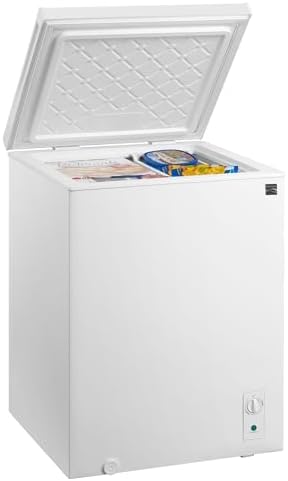
A chest freezer’s horizontal lid keeps cold air pooled inside when opened, since cold air sinks and does not spill out the way it does from a vertical door. That makes chest units more energy efficient and generally better at holding temperature through a power outage, which is why they remain the default choice among hunters and bulk meat buyers. The cost is organization: without baskets or a labeling system, items sink to the bottom and get forgotten.
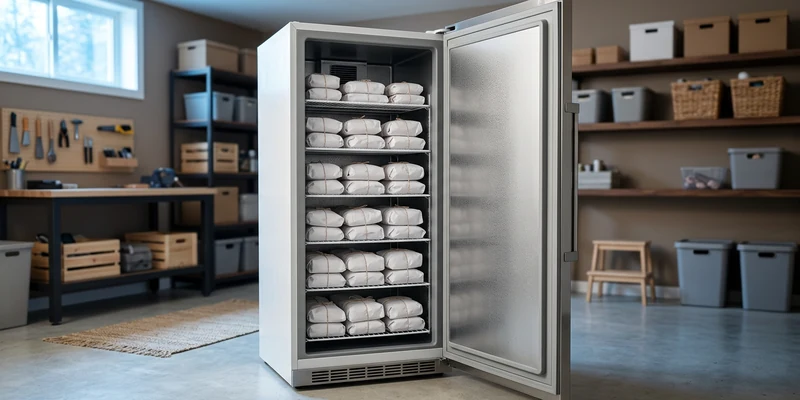
An upright freezer solves that problem with shelves and door bins, letting you see and reach items without unloading half the freezer to find one package. It takes up less floor space for the same footprint but loses some efficiency every time the door opens, since warm air rushes in immediately. For households short on floor space, or anyone who values grabbing a specific cut quickly, an upright freezer is a reasonable tradeoff even with the efficiency hit.
Sizing a Freezer to Your Actual Volume
Freezer capacity is measured in cubic feet, and the manufacturer’s listed figure is the only number worth trusting, not a rough size estimate from memory or a showroom floor. Think in terms of a full year, not just the next harvest or order: a household that processes one deer, buys a quarter of beef, and keeps garden produce frozen needs meaningfully more room than one that only freezes a single animal.
A small chest freezer or a compact upright can still work well for lighter volumes, supplementing rather than replacing a kitchen freezer. Oversizing costs more upfront and in running energy, but undersizing means overpacking, which hurts air circulation and makes the compressor work harder. When in doubt, round up rather than down.
Our Top Picks at a Glance
How we chose: we compared widely available deep freezers on capacity options, energy rating, and how consistently owners report reliable temperature control over years of use. Selections lean on manufacturer specifications and recurring themes in customer feedback rather than any hands-on trial of our own.
🏆 Best Overall
A mid-size chest-format deep freezer with an adjustable thermostat, the format most home meat processors settle on for its efficiency and raw capacity.

🗄️ Best Upright
An upright freezer with shelving and door bins, for households that value visibility and easy access over maximum efficiency.

💛 Best Value
A straightforward small chest freezer that covers the essentials for lighter processing volumes or as a second freezer.

Best for Garages and Outbuildings
Many deep freezers end up in a garage rather than a kitchen, which changes what to look for.
🚪 Best Garage-Rated Pick
A deep freezer built with a wide ambient temperature rating, so performance holds steady through a cold winter or a hot summer in an uninsulated garage.
Getting the Most From a Deep Freezer
Package meat before it goes in, ideally with a vacuum sealer, since sealed packages resist freezer burn far better than loose wrap and also pack more efficiently into either format. Keep an inventory list, even a simple one taped to the lid or door, since a full deep freezer without labels turns into guesswork within a single season.
If you grind your own meat before freezing it, portion it into workable amounts rather than large blocks, so future meals do not require thawing more than you need at once. Our meat grinder guide covers that process, and a meat thermometer remains essential for confirming safe temperatures once frozen meat is cooked.
Common Mistakes to Avoid
- Choosing upright for the visibility without weighing the efficiency cost. It is a fair tradeoff, but make it deliberately, not by default.
- Sizing for this season only. Processing volume tends to grow, and a freezer that is already full leaves no room to expand.
- Skipping the garage-rating check. Not every compressor handles unheated space well, and this is easy to overlook until performance suffers.
- Loading loosely wrapped meat. Both formats lose meat quality faster without vacuum-sealed or well-wrapped packaging.
- No plan for power outages. A chest format holds temperature longer during an outage, which is worth factoring in for areas with unreliable power.
Where to Go From Here
If you have settled on the chest format, our dedicated chest freezer guide covers hunting-season-specific sizing and setup in more detail. From there, a vacuum sealer is the next tool that protects everything you store.
Frequently Asked Questions
Is a chest freezer or upright freezer better for meat? Chest freezers generally hold temperature more efficiently and cost less to run, while upright freezers offer better organization and easier access. Both freeze meat equally well when properly maintained.
How big of a deep freezer do I need? It depends on your yearly processing volume, not just the current season. Check the manufacturer’s listed cubic footage and size generously rather than exactly to today’s needs.
How long does meat stay safe in a deep freezer? Meat held continuously at 0 degrees Fahrenheit or below is considered safe indefinitely by USDA, though quality gradually declines, faster for loosely wrapped meat than vacuum-sealed meat. Confirm current guidance at fsis.usda.gov.
Can a small chest freezer work for a single household? Yes, a small chest freezer or compact upright often suits households that process lighter volumes or want to supplement a kitchen freezer rather than replace it.
Does a garage freezer need special features? Many do. Garages face wider temperature swings than climate-controlled rooms, so a garage-ready or wide ambient rating helps the compressor perform consistently year round.
What happens to a deep freezer during a power outage? A full, well-sealed freezer holds safe temperature longer than an empty one, and chest-format units generally outperform upright units in this scenario because less cold air escapes when closed.
The Bottom Line
The best deep freezer for meat storage depends on the chest-versus-upright tradeoff: chest for efficiency and raw capacity, upright for visibility and easier access. Size the unit around a full year of processing, not just the current season, and check the garage rating if it will not live in a climate-controlled space. Whichever format you choose, vacuum-sealed packaging and a simple inventory system get the most out of it.