Last updated: August 16, 2026
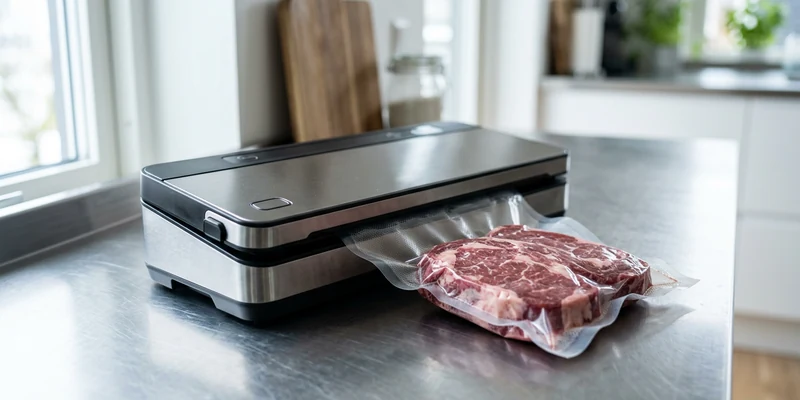
A vacuum sealer is one of the highest-value tools you can add to a home meat processing setup, because it directly protects the time you already spent breaking down, grinding, or smoking meat. Air is the main cause of freezer burn, and a vacuum sealer removes it before the package ever goes in the freezer.
This guide covers the different vacuum sealer machine types, what to check before buying, and the storage habits that keep vacuum-sealed meat safe as well as freezer-burn-free.
This article contains affiliate links. If you buy through them, we may earn a commission at no extra cost to you.
Quick Answer
Which vacuum sealer should you buy for meat?
- For most home processors, an external vacuum sealer machine that uses pre-made bags covers freezing, portioning, and everyday storage needs.
- If you process large volumes or want to reuse sealing materials, a chamber vacuum sealer handles liquid-heavy items like marinated cuts without the mess an external sealer struggles with.
- Whichever type you choose, buy enough vacuum sealer bags or rolls to match your typical batch size, since running out mid-processing session is a common frustration.
Note: vacuum sealing removes oxygen, which is good for freezer life but never a substitute for refrigeration or freezing. Vacuum-sealed raw meat left at room temperature is a genuine food safety risk.
What to Check Before You Buy
Vacuum sealers range widely in price and capability, and the right model depends on how much meat you process and how often.
| What to check | Why it matters | What to look for |
|---|---|---|
| Seal strength | A weak seal lets air back in over months of freezer storage | A double or reinforced seal bar, per manufacturer specifications |
| Bag compatibility | Not every vacuum sealer machine accepts every bag brand or roll width | Compatibility with widely available vacuum sealer bags and rolls |
| Moist food setting | Marinated meat and juicy cuts can get pulled into the sealer | A dedicated moist or wet mode on external sealers |
| Suction strength | Weak suction leaves air pockets that speed up freezer burn | The manufacturer’s stated vacuum strength and cycle time |
| Chamber vs external design | Liquid-heavy items overwhelm most external sealers | A chamber vacuum sealer if you regularly seal marinades or brines |
| Build for repeated use | Home processing means frequent, back-to-back sealing sessions | A motor and seal bar rated for continuous or heavy-duty use |
External Sealers vs Chamber Vacuum Sealers
An external vacuum sealer is the type most people picture: you place a pre-made bag with the opening resting in the machine, and it draws air out through that opening before sealing it shut. These machines are affordable, compact, and handle dry to lightly moist cuts well, which covers most home meat processing needs.
A chamber vacuum sealer works differently. The entire bag goes inside a sealed chamber, and air is removed from the whole chamber at once rather than sucked through the bag opening, which means liquids and marinades do not get pulled into the machine the way they can with an external sealer. Chamber models cost more and take up more counter space, but for anyone processing large volumes or regularly sealing wet or marinated cuts, that tradeoff pays off quickly in fewer ruined bags and less cleanup.
Vacuum Sealing and Food Safety
Vacuum sealing creates a low-oxygen environment, which is exactly the kind of setting that Clostridium botulinum, the bacterium behind botulism, favors when other conditions allow it to grow. That does not make vacuum sealing dangerous on its own, but it does mean vacuum-sealed raw meat must go straight into the refrigerator or freezer, never onto a counter or into room-temperature storage.
USDA guidance is clear that vacuum sealing is not a standalone preservation method for low-acid foods like meat. It extends freezer quality and slows spoilage in the refrigerator, but it does not replace safe minimum temperatures during cooking or safe storage temperatures afterward. Combine vacuum sealing with a reliable meat thermometer for cooking and a properly maintained freezer for storage, and confirm current guidance at fsis.usda.gov before trying any extended room-temperature or curing application.
Our Top Picks at a Glance
How we chose: we compared widely available vacuum sealers on seal strength, bag compatibility, and how consistently owners report reliable seals over repeated use. Selections lean on manufacturer specifications and recurring themes in customer feedback rather than any hands-on trial of our own.
🏆 Best Overall
A reliable external vacuum sealer machine with a moist food setting and a reinforced seal bar, sized for regular home meat processing sessions.

⭐ Upgrade Pick
A chamber vacuum sealer for processors who work with marinades, brines, or high volumes and want to reuse rolls of bagging material to cut down on cost.

💛 Best Value
An entry-level vacuum sealer machine that covers dry and lightly moist cuts reliably without the cost of a chamber system.

Bags, Rolls, and Getting the Most From Your Sealer
Pre-cut vacuum sealer bags are convenient for standard portion sizes, while rolls let you cut custom lengths for oddly shaped cuts like whole loins or racks. Either works, and many processors keep both on hand: bags for routine portions, rolls for anything unusual.
📦 Best Bags and Rolls
Textured, freezer-rated vacuum sealer bags and rolls sized for both everyday portions and larger cuts, matched to standard external sealer machines.

Where Vacuum Sealing Fits in Your Setup
Sealing works best as the last step before freezing, after meat has been trimmed and portioned. If you grind your own meat, portion and seal it right after grinding rather than letting it sit, since ground surfaces are more exposed to air and bacteria than whole cuts; our meat grinder guide covers that workflow in more depth. Once sealed, meat goes straight into a deep freezer or dedicated meat freezer, where the airtight seal noticeably extends how long quality holds up compared to loose wrap.
Smoked meat benefits the same way. Cool it fully before sealing, since sealing warm meat traps condensation inside the bag and can shorten its usable life. Our smoker guide covers cooling and handling in more detail for smoked cuts specifically.
Common Mistakes to Avoid
- Leaving vacuum-sealed raw meat at room temperature. The low-oxygen environment favors bacteria that thrive without air; refrigerate or freeze it promptly.
- Sealing meat while it is still warm. This traps condensation and moisture inside the bag.
- Overfilling the bag near the seal area. Juices and fat at the seal line prevent a clean, airtight closure.
- Reusing bags with visible punctures. Even a pinhole leak lets air back in over months of freezer storage.
- Treating vacuum sealing as a substitute for tested curing methods. Vacuum sealing extends freshness; it does not replace validated curing recipes for room-temperature or long-term unrefrigerated storage.
Where to Go From Here
A vacuum sealer protects everything upstream of it, from a fresh grind to a full smoker batch. Our chest freezer guide and deep freezer guide cover where sealed meat should actually live long term.
Frequently Asked Questions
Is it safe to vacuum seal raw meat? Yes, as long as it goes straight into the refrigerator or freezer afterward. Vacuum-sealed raw meat left at room temperature can support the growth of bacteria that thrive in low-oxygen environments.
How long does vacuum-sealed meat last in the freezer? Meat held at 0 degrees Fahrenheit or below is considered safe indefinitely by USDA, and vacuum sealing generally extends how long quality holds up compared to loosely wrapped meat, though exact timelines vary by cut. Confirm current guidance at fsis.usda.gov.
What is the difference between a vacuum sealer machine and a chamber vacuum sealer? An external vacuum sealer machine pulls air through the open end of a bag, while a chamber vacuum sealer removes air from an entire sealed chamber, which handles liquids and marinades far better.
Can I use any vacuum sealer bags with my machine? Not always. Check the manufacturer’s stated bag and roll compatibility before buying in bulk, since width and material can vary between brands.
Does vacuum sealing replace cooking meat to a safe temperature? No. Vacuum sealing affects storage and freshness, not doneness. Always cook meat to USDA’s minimum safe internal temperatures regardless of how it was packaged beforehand.
Why did my vacuum sealer bag fail to hold a seal? The most common causes are moisture or fat at the seal line, a worn seal bar, or a puncture in the bag itself. Wipe the bag opening clean before sealing and inspect bags for damage before reuse.
The Bottom Line
The best vacuum sealer for meat processing is a reliable external vacuum sealer machine with a moist food setting for most home use, or a chamber vacuum sealer if you regularly work with marinades or high volumes. Seal meat only after it has cooled and been trimmed, refrigerate or freeze it immediately afterward, and treat vacuum sealing as a freshness tool rather than a replacement for safe cooking temperatures or tested curing methods.