Last updated: August 16, 2026
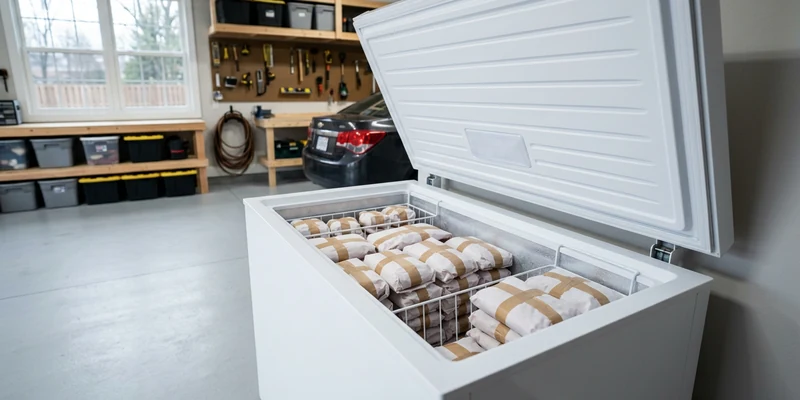
A dedicated chest freezer is what turns a single deer, hog, or bulk meat order into months of usable meals instead of an overloaded kitchen freezer. The horizontal lid design and dense insulation make chest freezers the standard choice among hunters and home butchers who need to store a large amount of meat at once.
This guide walks through what actually matters when comparing chest freezers for meat storage, how they differ from an upright or general-purpose deep freezer, and the setup habits that keep meat in good condition for the long haul. If you are still deciding between freezer styles, our broader deep freezer guide compares chest and upright designs side by side.
This article contains affiliate links. If you buy through them, we may earn a commission at no extra cost to you.
Quick Answer
Which chest freezer should you buy for meat?
- For a whole deer or a couple of hogs a year, size the freezer using the manufacturer’s listed cubic footage rather than guessing, and round up rather than down.
- If space is tight, a small chest freezer that fits in a closet or under a workbench still holds far more than most people expect for its footprint.
- If the freezer will live in an unheated garage, check that the model is rated for garage or low-ambient use, since not all compressors handle cold surroundings well.
Note: buy before the season, not during it. Chest freezer demand and shipping times both get tighter right before hunting season opens.
What to Check Before You Buy
Chest freezers look simple, but a few specifications decide whether one earns its keep for a decade or becomes a source of freezer burn and wasted meat.
| What to check | Why it matters | What to look for |
|---|---|---|
| Capacity | Undersized freezers get overpacked, which hurts air circulation and cooling | The manufacturer’s listed cubic footage, sized generously for your typical yearly volume |
| Temperature control | Meat quality depends on a stable, cold-enough setting | An adjustable thermostat with a clearly marked dial or digital readout |
| Basket and organization | Chest freezers bury items at the bottom without help | Included hanging baskets or dividers, or clear room to add your own |
| Defrost style | Manual defrost freezers ice up but tend to hold temperature better; frost-free costs some efficiency for convenience | Whichever tradeoff fits how often you are willing to defrost |
| Ambient rating | Garages and outbuildings can run colder or hotter than a home’s interior | A garage-ready or wide climate rating if the freezer will not live indoors |
| Lock and lid seal | A worn seal lets warm air in and drives up running cost | A tight-closing lid and, if needed, a built-in lock for security |
Chest Freezer or Upright: Why Horizontal Wins for Bulk Meat
A chest freezer’s horizontal design keeps cold air pooled inside even when the lid opens, since cold air is heavier than warm air and does not spill out the way it does from an upright’s vertical door. That single fact is why chest freezers tend to hold temperature better during a power outage and run more efficiently over a year of use, which matters when you are storing a season’s worth of meat rather than a week’s worth of groceries.
The tradeoff is organization. Without baskets or dividers, a chest freezer becomes a pile where the oldest packages sink to the bottom and get forgotten. Most owners solve this with a simple system: hanging wire baskets for frequently used cuts, a written or taped inventory list on the lid, and a rule of loading newest packages toward one side so older ones naturally get used first.
Our Top Picks at a Glance
How we chose: we compared widely available chest freezers on capacity options, temperature control, and how consistently owners report the compressor holding a steady temperature over years of use. Selections lean on manufacturer specifications and recurring themes in customer feedback rather than any hands-on trial of our own.
🏆 Best Overall
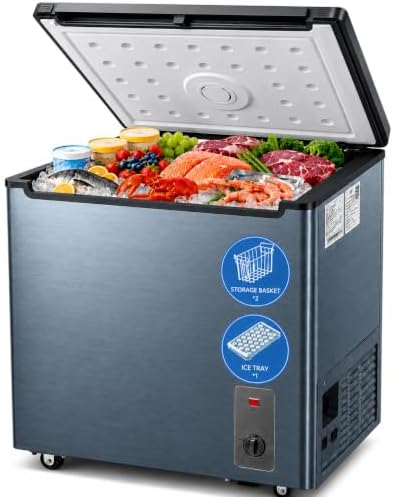
A mid-size chest freezer with an adjustable thermostat and included baskets, sized to comfortably hold a full deer or a couple hundred pounds of processed meat.
🏠 Best for Small Spaces
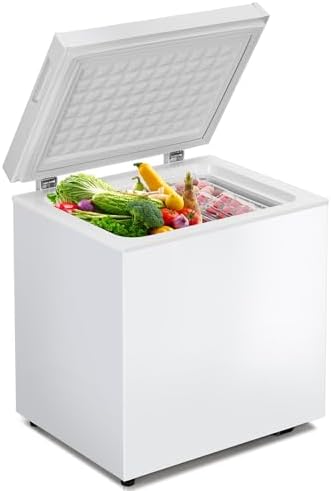
A small chest freezer that fits in a closet, garage corner, or under a workbench, for households that process smaller amounts or supplement a main freezer.
💛 Best Value
A no-frills chest freezer that covers the essentials, capacity and a working thermostat, without extra features that drive up cost.

Best for Garages and Outbuildings
A garage freezer needs to handle a wider temperature swing than one living in a climate-controlled house, since garages run colder in winter and hotter in summer than most compressors are designed around.
🚪 Best Garage-Rated Pick
A chest freezer with a wide ambient temperature rating built for unheated spaces, so performance does not suffer through a cold winter or a hot summer in an uninsulated garage.

Setting Up and Loading a Meat Freezer
Package meat well before it goes in. Air is the enemy of frozen meat quality, so vacuum sealing with a vacuum sealer before freezing dramatically slows freezer burn compared to loose butcher paper or plastic wrap alone. Label every package with the cut and the date, since a chest freezer hides its contents and a forgotten package from two seasons ago is not a good surprise.
Give the compressor room to work. Chest freezers need clearance around the back and sides for airflow, and they run most efficiently when kept reasonably full, since a fuller freezer holds cold better than a mostly empty one. If you are grinding your own meat before freezing it, pace the load so the freezer is not asked to bring a huge volume of room-temperature meat down to temperature all at once, which our meat grinder guide touches on as part of a full processing day.
Common Mistakes to Avoid
- Buying exactly the size you need today. A meat freezer that is already full the first season leaves no room to grow into more processing or a bigger harvest.
- Skipping the vacuum seal step. Loose wrap invites freezer burn far faster than sealed packaging.
- Overloading it in one trip. Adding a large volume of unfrozen meat at once can raise the internal temperature of everything already stored inside.
- Ignoring the door seal over time. A worn gasket lets warm air in constantly, which shows up as a higher power bill and softer ice buildup.
- No inventory system. Without labels and a rough map, older packages get buried and wasted.
Where to Go From Here
If you are still weighing chest versus upright storage, our deep freezer guide compares both formats and helps with sizing math. Once the freezer is sorted, a meat thermometer is the next tool worth getting right, since it protects the meat you worked to store in the first place.
Frequently Asked Questions
What size chest freezer do I need for a deer? Requirements vary by how the animal is processed and packaged, but most home processors find a mid-size chest freezer comfortably holds a full deer with room left for other meat. Check the manufacturer’s listed cubic footage against your expected volume before buying.
Is a chest freezer better than an upright for meat? Chest freezers generally hold temperature more reliably because cold air stays inside when the lid opens, which matters for long-term meat storage. Upright freezers offer easier organization in exchange for that efficiency, covered in our deep freezer guide.
Can I put a chest freezer in an unheated garage? Many can, but not all compressors are rated for wide ambient swings. Confirm the manufacturer’s garage-ready or wide-climate rating before installing one outside a climate-controlled space.
How long does meat actually stay in good condition in a chest freezer? Meat held continuously at 0 degrees Fahrenheit or below is considered safe indefinitely by USDA, though quality gradually declines over time, faster for loosely wrapped meat than vacuum-sealed meat. Confirm current guidance at fsis.usda.gov.
Do I need baskets or dividers? They are not required, but they make a real difference in finding packages without unloading the whole freezer. Many chest freezers include at least one hanging basket standard.
How much does a chest freezer cost to run? Running cost depends on the model’s efficiency rating, ambient temperature, and how often the lid opens. A well-sealed, reasonably full freezer runs more efficiently than a mostly empty one.
The Bottom Line
The best chest freezer for meat storage is one sized generously for your actual yearly volume, with a reliable adjustable thermostat and, if it will live outside a climate-controlled space, a garage-ready rating. Pair it with vacuum-sealed packaging and a simple labeling system, and buy well before hunting season rather than scrambling once the freezer is already needed.