Last updated: August 16, 2026
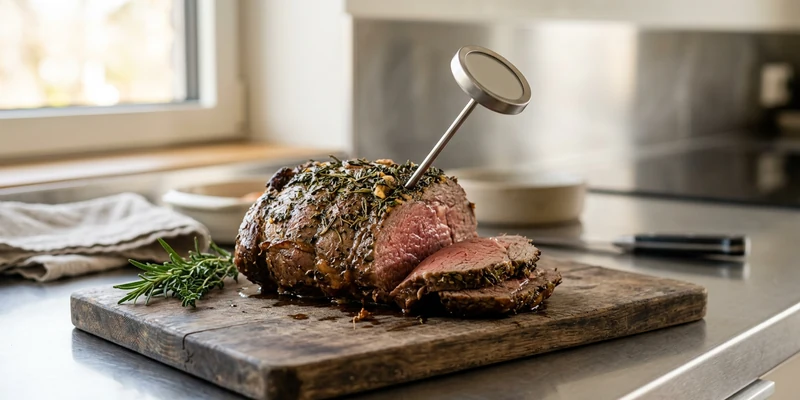
A reliable meat thermometer is the single tool that separates guesswork from food safety in home meat processing. Whether you are checking a roast in the oven, a shoulder on the smoker, or a batch of fresh sausage off the stuffer, color and touch tell you almost nothing about what is happening at the center of the meat.
This guide covers the different thermometer styles, what actually matters when you compare models, and how to read them correctly so the numbers you get are ones you can trust. We also cover where a thermometer fits alongside the rest of a home processing setup, from the smoker to the freezer.
This article contains affiliate links. If you buy through them, we may earn a commission at no extra cost to you.
Quick Answer
Which meat thermometer should you buy?
- For everyday cooking and butchering checks, an instant read thermometer that gives a reading in a few seconds covers most needs on its own.
- For long smoking or roasting sessions, a wireless meat thermometer with a leave-in probe lets you track the center of the meat without opening the lid or oven door.
- If you process a lot of meat at once, a model with two or more probes lets you monitor several cuts or a whole smoker load at the same time.
Note: whichever style you choose, always confirm safe minimum internal temperatures against current USDA guidance rather than memory or habit.
What to Check Before You Buy
These are the specifications that actually affect whether a thermometer earns a permanent spot in your kitchen or ends up in a drawer after a few uses.
| What to check | Why it matters | What to look for |
|---|---|---|
| Read speed | Slow thermometers invite you to guess instead of wait | An instant read design built for a fast response, per the manufacturer’s listed speed |
| Probe type | A handheld probe and a leave-in probe solve different problems | A leave-in or wireless probe for smoking and roasting, a folding instant read probe for quick checks |
| Number of probes | One probe only monitors one piece of meat at a time | Two or more probes if you regularly cook multiple cuts or a full smoker load |
| Display and range | You need to read it in poor light or from across the yard | A backlit display, and for wireless models, the manufacturer’s stated wireless range |
| Water resistance | Thermometers get rinsed, dropped in sinks, and used in the rain | A stated water resistance rating rather than an unrated splash-proof claim |
| Calibration | A thermometer that drifts out of true gives false confidence | A model that supports simple calibration, typically checked in ice water |
Instant Read, Leave-In, and Wireless: Picking a Style
An instant read thermometer is a handheld probe you insert, read, and remove. It is the right tool for spot checks, meaning ground meat patties, poultry breasts, or a roast near the end of cooking, and it is the style most home cooks reach for first because it works for almost every task without needing to be part of the cooking setup.
A wireless meat thermometer, by contrast, stays in the meat for the whole cook. A probe connects by cable or radio to a base unit or phone app, so you can track the center temperature of a smoker load or oven roast without opening the door and losing heat. For anyone doing long, low-and-slow smoking sessions, a leave-in or wireless probe is closer to essential than optional, since repeatedly checking with an instant read thermometer means repeatedly losing smoker heat and moisture.
Why Internal Temperature Is the Only Reliable Safety Check
Color, juice clarity, and firmness are not reliable indicators of doneness or safety. The only way to know that meat has reached a temperature high enough to address common foodborne pathogens is to measure it directly with a thermometer probe placed in the thickest part of the cut, away from bone, fat, and gristle.
The U.S. Department of Agriculture’s Food Safety and Inspection Service publishes minimum safe internal temperatures: whole cuts of beef, pork, veal, and lamb to 145 degrees Fahrenheit with a rest of at least three minutes, ground beef, pork, lamb, and veal to 160 degrees Fahrenheit, and all poultry, ground or whole, to 165 degrees Fahrenheit. These numbers change only when USDA updates its guidance, so treat any secondhand chart as a starting point and confirm current figures at fsis.usda.gov before you rely on them.
Our Top Picks at a Glance
How we chose: we compared widely available thermometers on read speed, probe durability, and how consistently owners report accuracy holding up over repeated use. Selections lean on manufacturer specifications and recurring themes in customer feedback rather than any hands-on trial of our own.
🏆 Best Overall
A fast instant read thermometer with a folding probe and backlit display, the style most home meat processors reach for on a daily basis.

⭐ Upgrade Pick
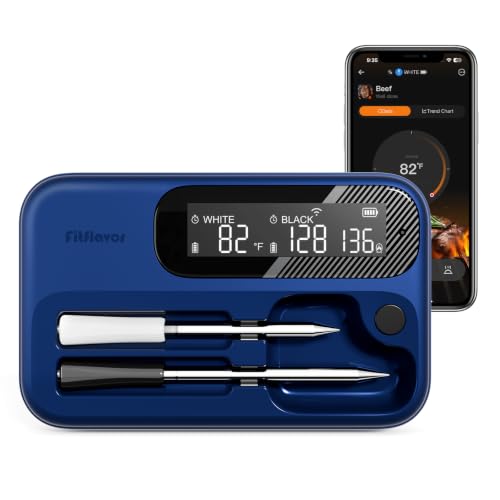
A wireless meat thermometer with an app-connected leave-in probe, built for tracking a smoker or oven roast from a distance without lifting the lid.
💛 Best Value
A simple, accurate instant read model that covers the basics without the extra cost of wireless features.
Picks by Situation: Smoking, Grilling, and Deep Processing
A few use cases call for a different kind of probe than the all-purpose picks above.
🔥 Best for Smoking
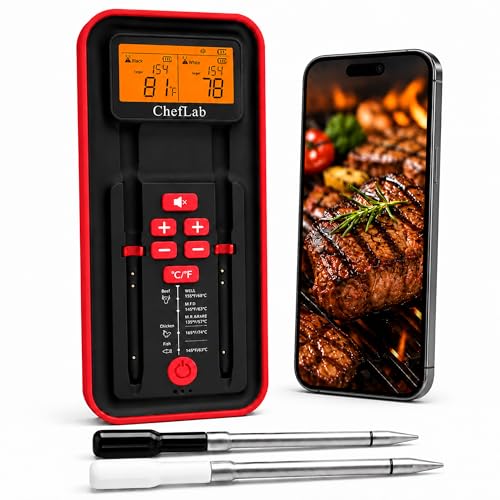
A dual-probe wireless thermometer that tracks both the meat and the smoker chamber at once, useful when a built-in grill thermometer on the lid only tells you ambient air temperature, not meat temperature. Pairs naturally with a dedicated smoker setup.
🌡️ Best Multi-Probe
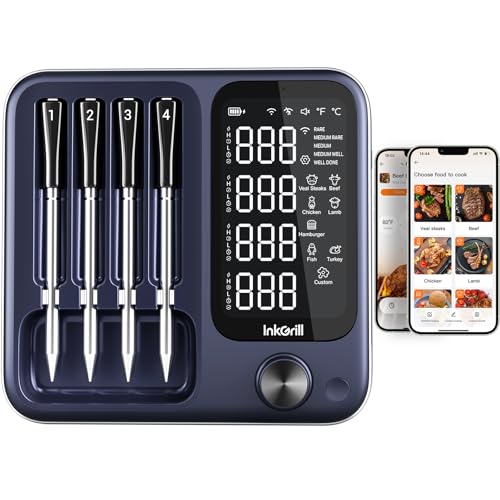
A four-probe or six-probe wireless system for cooks who process multiple cuts at once or run a full smoker load, so every piece gets its own reading instead of one average guess.
Using a Thermometer the Right Way
Insert the probe into the thickest part of the meat, avoiding bone, fat pockets, and gristle, since those read differently than muscle and will throw off your number. For thin cuts like burger patties or chicken breasts, insert from the side so the tip sits in the center rather than passing through to the far side.
Once meat is cooked and cooled, what you do next matters as much as the cook itself. Meat that will not be eaten within a few days should go into the freezer, ideally after being packed with a vacuum sealer to slow freezer burn, and stored in a dedicated chest freezer if you process in any real volume. Keep a meat thermometer probe on hand as a spare, since probes are usually the first part to wear out on a well-used unit.
Common Mistakes to Avoid
- Trusting color instead of a reading. Pink pork and clear poultry juices are not reliable safety signals on their own.
- Probing near bone or fat. Bone conducts heat differently than muscle and will give a false high reading.
- Skipping calibration checks. An uncalibrated thermometer can drift several degrees off without any visible sign.
- Confusing a grill thermometer with a meat probe. A lid-mounted grill thermometer measures air temperature, not the meat itself.
- Not resting the meat. Temperature can continue to rise briefly after cooking, and USDA’s rest-time guidance for whole cuts is part of the safety standard, not an optional step.
Where to Go From Here
A thermometer is the safety layer that sits on top of everything else you do with meat at home. If smoking is part of your routine, our smoker guide covers the equipment side. If you grind your own meat before cooking it, our meat grinder guide covers what to look for there, including the higher 160 degree target that ground meat requires.
Frequently Asked Questions
What internal temperature is safe for ground meat? USDA’s published guidance calls for ground beef, pork, lamb, and veal to reach 160 degrees Fahrenheit, higher than the 145 degree target for whole cuts, because grinding spreads any surface bacteria through the meat.
How fast should an instant read thermometer work? Most current instant read models are built to give a stable reading within a few seconds. Check the manufacturer’s specific listed response time before buying if speed matters for your use case.
Can I use a wireless meat thermometer in the oven and on a grill? Many are rated for both, but heat tolerance varies by model and by whether the probe cable or the base unit sits inside the heat source. Confirm the manufacturer’s rated temperature range for each part before use.
Do I need more than one probe? Not for basic cooking, but if you regularly smoke or roast multiple cuts at once, a multi-probe wireless meat thermometer saves you from guessing which piece is closest to done.
How do I know if my thermometer is still accurate? Test it in a glass of ice water, which should read 32 degrees Fahrenheit. A reading noticeably off that mark means the thermometer needs calibration or replacement.
Is a grill thermometer the same as a meat thermometer? No. A grill thermometer built into a lid measures ambient chamber temperature, not the internal temperature of the meat, so it should never replace a dedicated meat probe.
The Bottom Line
The best meat thermometer for most home meat processors is a fast instant read model for everyday checks, backed up by a wireless leave-in probe if smoking or long roasting is part of the routine. Confirm safe minimum internal temperatures against current USDA guidance, keep the probe away from bone and fat, and treat calibration as routine maintenance rather than an afterthought.