Last updated: August 16, 2026
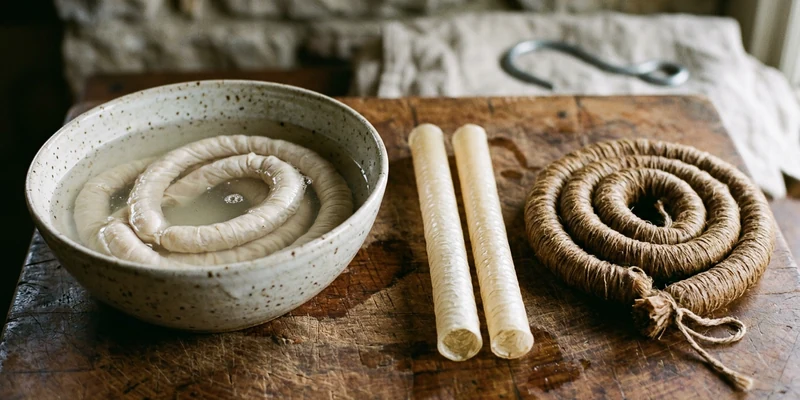
Sausage casings come in three genuinely different materials, natural, collagen, and fibrous, and mixing up which one fits which sausage is one of the more common frustrations for anyone new to stuffing at home. The right casing depends less on personal preference and more on what kind of sausage you’re actually making and whether you plan to eat the casing itself.
This guide breaks down what sausage casings are made of, how to size one to your sausage, how to prepare them before stuffing, and why fibrous casings are never meant to be eaten.
Quick Answer
What are sausage casings made of?
- Natural casings come from the cleaned intestines of hogs, sheep, or cattle and are edible, with the traditional snap people associate with a good sausage.
- Collagen casings are made from processed animal hide collagen and come in both edible and non-edible versions, more uniform in size than natural casings.
- Fibrous casings are a thicker, non-edible material meant to be peeled off after cooking, common for summer sausage and salami-style logs.
- Match casing diameter to the sausage type: smaller for breakfast links, mid-size for bratwurst and Italian sausage, larger for summer sausage and salami.
Casing Types at a Glance
These three materials cover the large majority of home sausage making. This table compares what they’re made of and where each one fits.
| Casing type | Made from | Edible? | Best for |
|---|---|---|---|
| Natural | Cleaned hog, sheep, or beef intestine | Yes | Breakfast links, bratwurst, Italian sausage, hot dogs |
| Collagen (edible) | Processed collagen from beef hide | Yes | Fresh sausage and snack sticks, more uniform sizing than natural |
| Fibrous (non-edible) | Thicker collagen or cellulose fiber | No, peeled off after cooking | Summer sausage, salami, bologna-style logs |
Natural Casings: Intestine, Not a Compromise
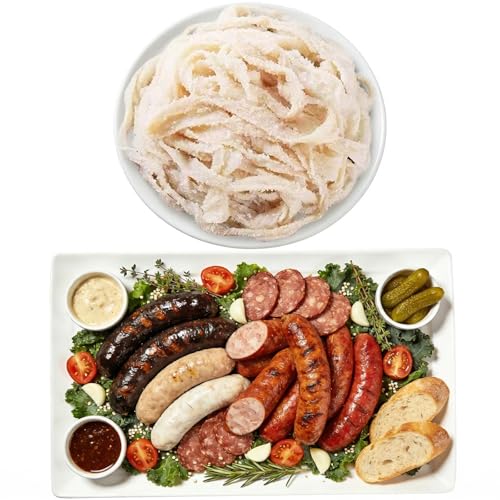
Natural casings are made from the cleaned inner lining of hog, sheep, or beef intestines, and they’re the traditional choice for anyone chasing the characteristic snap a good sausage has when you bite into it. Hog casings suit larger links like bratwurst and Italian sausage, while narrower sheep casings are common for breakfast links and hot dogs, where a thinner, more delicate casing fits the sausage’s size.
The tradeoff is handling. Natural casings are more prone to splitting under uneven stuffing pressure and require real soaking and rinsing before use, which is why some home processors switch to collagen for the sake of convenience even while missing that traditional bite.
Collagen Casings: Edible and Non-Edible Versions
Collagen casings are manufactured from collagen extracted from beef hide, bone, and connective tissue, then formed into a uniform tube that’s far more consistent in size than a natural casing ever will be. Edible collagen casings work well for fresh sausage, snack sticks, and pepperoni-style sticks meant to be eaten with the casing intact.
Non-edible collagen casings exist too, and they’re a step toward the thicker, tougher fibrous casings covered next, built specifically to be removed rather than eaten. Checking the specific product’s packaging before you buy is the only reliable way to know which version you’re getting, since edible and non-edible collagen casings can look similar at a glance.

Fibrous Casings: Built to Be Peeled, Not Eaten
Fibrous casings are a thicker, tougher material, often made from cellulose fiber or heavier collagen, and they are never eaten. They’re built specifically to hold a sausage’s shape through stuffing, smoking, and slicing, then get peeled off before the sausage is served, which is exactly why summer sausage and salami-style logs almost always use them.
Fibrous casings need soaking in warm water before stuffing to become pliable enough to work with, and skipping that step is a common reason they crack or tear during stuffing rather than during the peel-off step where cracking doesn’t matter. If you’re making a log-style sausage, our summer sausage guide covers where fibrous casings fit into that specific process.
Picking the Right Size for Your Sausage
Casing diameter should match the sausage you’re making, not just whatever happens to be available. Narrower casings, in the roughly 19 to 24mm range, suit breakfast links and hot dogs, mid-range casings around 32 to 38mm fit bratwurst and Italian sausage, and larger diameters above that are built for summer sausage, salami, and bologna-style logs.
Going too large for a smaller sausage style leaves an oversized, awkward log rather than the individual links a recipe calls for, while too small a casing for a log-style sausage means excess splitting risk during stuffing and slicing. When in doubt, checking the diameter a specific recipe recommends before buying casings saves a wasted batch.
Rinsing and Soaking Casings Before Stuffing
Natural casings, whether packed in salt or brine, need a soak of at least 30 minutes in cool water, followed by running water through the inside of the casing itself to flush out packing salt and check for any splits before you load it onto a stuffer. Skipping this step is one of the more common reasons natural casings split mid-stuffing, since dry, unsoaked casing is far less pliable than it needs to be.
Fibrous casings need their own soak, typically warm water for the time listed on the specific product’s packaging, to soften enough for stuffing without tearing. Collagen casings, by contrast, are usually ready to use straight from the package, which is one more reason they’re a lower-hassle option for a first-time stuffer.
Where to Find Casings
A local butcher shop that processes its own sausage is often willing to sell casings in smaller quantities than the bulk packs most online retailers carry, which is worth asking about if you only need enough for one or two batches. Farm supply stores in areas with an active hunting or homesteading community sometimes stock natural and fibrous casings as well, particularly around fall processing season.
Online retailers carry the widest selection of natural, collagen, and fibrous casings in specific diameters, and they’re usually the more reliable option if a local butcher shop or farm store doesn’t stock the exact size a recipe calls for.
Common Mistakes to Avoid
- Trying to eat fibrous casing. It’s not digestible and is meant to be peeled off before serving, not left on.
- Skipping the soak on natural or fibrous casings. Dry casing splits far more easily than properly soaked casing.
- Using the wrong diameter for the sausage style. A casing sized for links doesn’t work well for a summer sausage log, and the reverse is just as mismatched.
- Buying collagen casing without checking edible vs non-edible. The two look similar on the package but serve different purposes.
- Not rinsing packing salt out of natural casings. Leftover salt affects both flavor and how the casing behaves during stuffing.
Frequently Asked Questions
What is sausage casing made of? Natural casings come from cleaned hog, sheep, or beef intestine. Collagen casings are made from processed animal hide collagen. Fibrous casings use thicker collagen or cellulose fiber and are not eaten.
Are beef casings for sausage edible? Natural beef casings are edible and are typically used for larger sausages like ring bologna or bigger links, where a sturdier natural casing holds up well.
Why are fibrous casings not edible? They’re made from a thicker, tougher material specifically designed to hold shape through stuffing, smoking, and slicing, then be peeled away, not digested.
Where can I find sausage casings near me? A local butcher shop that makes its own sausage, a farm supply store, or an online casing retailer are the three most common sources, with online retailers offering the widest range of sizes.
Do natural casings need to be soaked before use? Yes. Soak for at least 30 minutes and rinse the inside with running water to remove packing salt and check for splits before stuffing.
What size casing do I need for bratwurst? Roughly 32 to 38mm natural hog casing or an equivalent collagen casing is the common range for bratwurst and similar links.
Is sausage seasoning different depending on the casing type? Not directly. Casing choice affects size and texture, while seasoning is a separate decision based on the sausage style itself, though log-style sausages in fibrous casing often use bolder, longer-cured seasoning blends than fresh links.
The Bottom Line
Natural casings deliver traditional snap and are fully edible; collagen casings offer more consistent sizing in both edible and non-edible forms; fibrous casings are built to be peeled off, never eaten, and are the standard for summer sausage and salami. Match the diameter to your sausage style, soak natural and fibrous casings properly, and check packaging before assuming any casing is edible.