Last updated: August 16, 2026
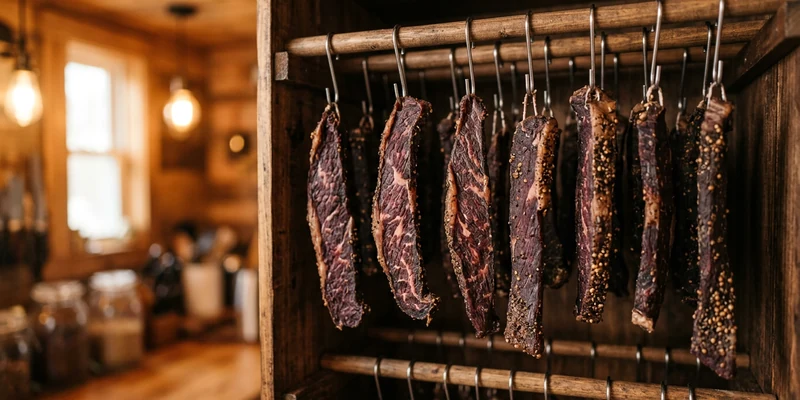
Learning how to make biltong means learning a drying method that is genuinely different from jerky, not just a South African name for the same snack. Biltong is cured in vinegar and salt, then air dried whole or in thick strips, and it is never cooked or heated the way USDA guidance requires for jerky. That difference is exactly why biltong needs its own careful approach rather than a jerky recipe with different spices.
This guide walks through what biltong actually is, how the curing and drying process works, why it differs from jerky on the food safety side, and the mistakes that turn a promising batch into a spoiled one.
Quick Answer
How do you make biltong at home?
- Biltong is beef (or venison) cut into strips, marinated in vinegar and salt under refrigeration, then air dried for several days until firm.
- Unlike jerky, biltong is not heated before drying. The vinegar and salt do the safety work by lowering pH and water activity instead of a heat kill step.
- Because there is no heat step, marination temperature, drying humidity, and airflow all matter more than they do for jerky, and cutting corners on any of them is where homemade batches go wrong.
- If you are not confident in a validated process for homemade biltong, the more conservative option is to follow USDA jerky guidance and heat the meat before drying, or start with a countertop biltong box built for the airflow this method needs.
Biltong vs Jerky at a Glance
Biltong and jerky look similar in the bag, but the process that gets them there is not the same. This table lays out where they diverge.
| Step | Jerky | Biltong |
|---|---|---|
| Cut | Thin strips, sliced with or against the grain | Thicker strips or whole muscle pieces |
| Marinade base | Soy, Worcestershire, sugar based | Vinegar and salt, often with coriander and black pepper |
| Heat step | USDA guidance calls for heating to 160°F before drying | No heat step; safety relies on vinegar acidity and salt reducing water activity |
| Drying method | Dehydrator or oven at a controlled temperature | Open-air drying at room temperature with steady airflow, or a dedicated biltong box |
| Texture goal | Fully dry, often brittle to chewy | Firm outside, traditionally a little softer in the center |
Why Biltong Skips the Heat Step
USDA guidance for homemade jerky is specific: heat meat to an internal temperature of 160°F (poultry to 165°F) before dehydrating, because a dehydrator alone will not reliably kill bacteria at drying temperatures, and once meat dries, surviving bacteria become more heat resistant. Biltong was never built around that step. Instead, it leans on two other mechanisms working together: the vinegar in the marinade drops the meat’s pH, and the salt draws out moisture and lowers water activity, both of which make it harder for pathogens to grow.
Published food science research on the traditional biltong process has measured meaningful pathogen reduction using refrigerated vinegar-and-salt marination followed by several days of controlled drying, without any heat kill step. That is reassuring evidence that the traditional method has real science behind it, but it also means the marination time, refrigeration temperature, and drying conditions used in that research are the parts worth taking seriously, not the parts worth guessing at.
The Marination Stage
Biltong marination typically happens under refrigeration, not on the counter, for roughly 12 to 24 hours. The vinegar (commonly a plain white or cider vinegar) and salt need contact time with the meat to actually lower pH and start pulling out moisture, and keeping the meat cold during that window limits how much bacteria can multiply while the marinade goes to work. Spices like coriander and black pepper are traditional flavor additions at this stage, but they are not doing any of the safety work; the vinegar and salt are.
Cutting the meat with the grain, rather than against it as jerky recipes often recommend, is standard for biltong because it produces the long strips that hang and dry evenly. Trim visible fat before marinating, since fat does not cure or dry the way lean muscle does and can turn rancid before the rest of the strip is ready.
Drying: Airflow and Humidity Matter More Than Temperature
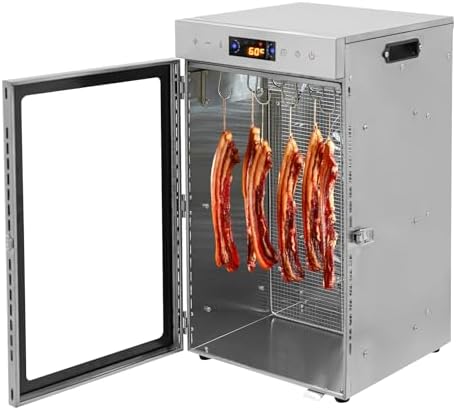
Traditional biltong dries at room temperature, not in a heated dehydrator, which is exactly why steady airflow and reasonable humidity control matter so much. Hanging strips in a spot with good air movement, whether that is a dedicated biltong box with a small fan or a well-ventilated area away from direct sun and kitchen humidity, is what keeps the outside from drying faster than the inside can catch up. A biltong box with a low wattage bulb or small fan gives more consistent results than an open kitchen counter, especially in humid climates where ambient conditions vary day to day.
Most biltong is ready somewhere in the range of four to seven days, depending on strip thickness, humidity, and how firm you like the final texture. Traditional biltong is often left a touch softer in the center than jerky, but “softer” is not the same as “undried,” and a strip that still feels wet or spongy at the core has not finished the process.
Beef vs Venison for Biltong
Beef is the traditional and most forgiving choice for biltong, since it is widely available in the lean, uniform cuts that dry evenly, like eye of round or silverside. Venison works well too, and biltong is a popular way for hunters to use lean cuts from a harvest, but venison’s lower fat content means it can dry a bit faster than beef of a similar thickness, so checking strips a day earlier than you might with beef is a reasonable habit. If you are working with venison from a recent hunt, our guide on deer processing after the hunt covers the cooling and handling steps that come before it ever reaches a marinade.
Whichever meat you use, consistency in strip thickness matters more than the choice of beef versus venison. Cutting a batch to a uniform thickness means the whole batch finishes drying around the same time, instead of some strips being ready while others are still working through the process.
Biltong is cut with the grain in thick strips, which is the opposite of jerky, but both benefit from consistent thickness. If you make both, our dehydrator guide covers the machines that handle the jerky side.
Storing Finished Biltong
Once biltong is properly dried, it keeps at room temperature in a breathable container for a period, though refrigeration or freezing extends that noticeably and is the safer default if you are not eating it within a week or two. Slicing biltong thin right before eating, rather than pre-slicing the whole batch, keeps more surface area protected until you actually need it. For batches you want to keep for months rather than weeks, our guide on mylar bags for meat storage covers when that kind of long-term dry storage is appropriate and when it is not.
Fully dried biltong keeps for weeks in a sealed bag and only a few days in an open container. Portioning it with a vacuum sealer lets you open one bag at a time instead of exposing a whole batch to air.

Common Mistakes When Making Biltong
- Marinating on the counter instead of the refrigerator. Room temperature marination gives bacteria far more time to multiply before the vinegar and salt take effect.
- Treating it like jerky and skipping the vinegar entirely. Without the acid, you lose one of the two mechanisms biltong relies on for safety.
- Drying in a closed, humid space. Poor airflow lets the surface stay damp longer, which is exactly the environment bacteria and mold prefer.
- Cutting strips too thick “to be safe.” Thicker pieces take longer to dry through, and a damp center is a bigger risk than a thin, fully dried strip.
- Assuming softer always means safe. Traditional texture is softer than jerky, but a strip that is still wet in the middle after the expected drying window has not finished curing.
Frequently Asked Questions
How do you make biltong at home? Marinate beef or venison strips in vinegar and salt under refrigeration for about 12 to 24 hours, then air dry them for several days with steady airflow until the outside is firm and the inside is no longer wet.
Is biltong safe to eat since it is not cooked? The traditional process relies on vinegar acidity and salt reducing water activity instead of a heat step, and research on the biltong process has measured real pathogen reduction using that method when refrigerated marination and proper drying time are followed closely.
What is the difference between biltong and jerky? Jerky is heated to a safe internal temperature before drying, per USDA guidance, and biltong is not. Biltong also uses a vinegar and salt marinade rather than a sweet, soy based one, and is cut thicker.
How long does biltong take to dry? Most batches are ready in roughly four to seven days, depending on strip thickness, humidity, and airflow. Thicker strips and more humid environments take longer.
Can you make biltong without a biltong box? Yes, with a well-ventilated, dry hanging spot, but a dedicated box with airflow control gives more consistent results, especially in humid climates.
What cuts of beef work best for biltong? Lean, relatively uniform cuts like eye of round or silverside are traditional choices because they trim easily and dry evenly. Our beef cutting chart shows where those cuts come from on the animal.
Can you make biltong with venison? Yes, and it’s a popular way to use lean cuts from a deer harvest, though venison’s lower fat content can mean slightly faster drying than beef of the same thickness.
The Bottom Line
Biltong is a legitimate, long-standing drying method, not a shortcut version of jerky, and it earns that status through refrigerated vinegar-and-salt marination and carefully managed airflow rather than a heat step. Follow the marination time and drying conditions closely, trust firmness over guesswork, and if you are ever unsure about a batch, the more conservative jerky-style heat treatment is always an option.
See biltong vs jerky at a glance