Last updated: August 16, 2026
A bone saw is the tool that gets you through joints, ribs, and the spine when a knife alone will not do the job, whether you are breaking down a deer after a hunt or splitting a half cow into freezer-ready pieces. Picking the right one comes down to how much volume you actually process in a season, not how impressive a machine looks in a product listing.
This guide compares hand saws to bandsaws, explains blade length and tooth pitch, and covers when a bandsaw’s cost actually pays for itself in time saved.
This article contains affiliate links. If you buy through them, we may earn a commission at no extra cost to you.
Quick Answer
Which bone saw should you buy?
- For processing one or two deer a season, or occasional home butchering, a manual hand bone saw is inexpensive, easy to store, and does the job.
- If you process multiple animals a year, or regularly break down a half or whole cow, an electric meat bandsaw saves real time and cuts more consistently through repeated use.
- Look for full stainless steel construction on any saw or bandsaw, since that is what actually holds up to repeated washing and contact with raw meat and bone.
- Whatever you choose, match blade length and tooth pitch to the bones you actually cut, not the biggest number available.
What to Check Before You Buy
Bone saws and bandsaws vary in ways that matter more once you are mid-cut than they do on a spec sheet.
| What to check | Why it matters | What to look for |
|---|---|---|
| Blade length | Longer blades clear thicker bones and joints in fewer strokes | A length matched to the largest animal you regularly process, not the smallest |
| Tooth pitch (TPI) | Too few teeth per inch tears bone; too many clog with bone dust and fat | A pitch designed specifically for bone rather than a general-purpose wood or metal blade |
| Material | Carbon steel rusts fast under repeated contact with moisture and blood | Full stainless steel construction on the blade and frame |
| Cleanability | A saw that is hard to disassemble gets cleaned less thoroughly between uses | Removable blades and simple, food-safe surfaces without hard-to-reach seams |
| Drive type (bandsaws) | Motor power determines how quickly and cleanly a bandsaw gets through repeated cuts | A motor sized for your typical batch, not just the lightest available model |
Hand Saw or Bandsaw: Which Fits Your Volume
A hand bone saw is inexpensive, needs no power source, stores in a drawer, and works fine for the bone cuts involved in processing one or two deer a season or trimming a single half cow order. It takes more physical effort and time per cut than a powered option, which matters less when the total number of cuts in a season is small.
A bandsaw earns its cost once volume climbs, several deer a year, regular hog processing, or repeated whole and half cow orders, since it turns what would be minutes of hand-sawing into seconds per cut and produces a cleaner, more consistent cut face across a large batch. Below that volume threshold, a bandsaw is usually more machine than the job calls for.
Blade Length and Tooth Pitch Explained
Blade length determines how much bone diameter a saw clears in one stroke; a longer blade gets through a thick joint or spine section with fewer strokes than a short one, which matters both for effort and for cut consistency. Tooth pitch, measured in teeth per inch, needs to match the material: too coarse a pitch tears through bone roughly, while too fine a pitch clogs quickly with bone dust and fat and needs constant clearing.
General-purpose wood or metal blades are not a substitute for a blade designed specifically for bone and meat, since the tooth geometry that works well on lumber tends to tear rather than cut cleanly through bone and connective tissue.
Sawn cuts go into the freezer more often than they go straight to the pan, and bone in packages are the ones most likely to puncture a bag. Our vacuum sealer guide covers which machines and bags handle bone in meat.
Our Top Picks at a Glance
How we chose: we compared widely available saws and bandsaws on blade material, tooth design, and how consistently owners report reliable performance across repeated seasons of use. Selections lean on manufacturer specifications and recurring themes in customer feedback rather than any hands-on trial of our own.
🏆 Best Overall
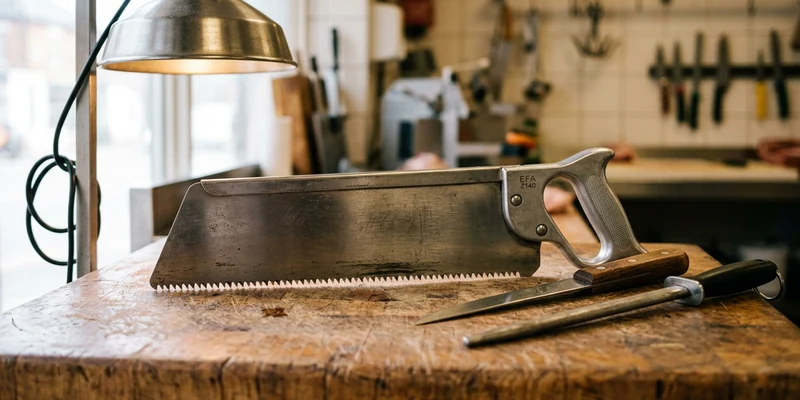
A stainless steel hand bone saw with a blade designed specifically for bone, sized for regular deer and home butchering work.

⭐ Upgrade Pick
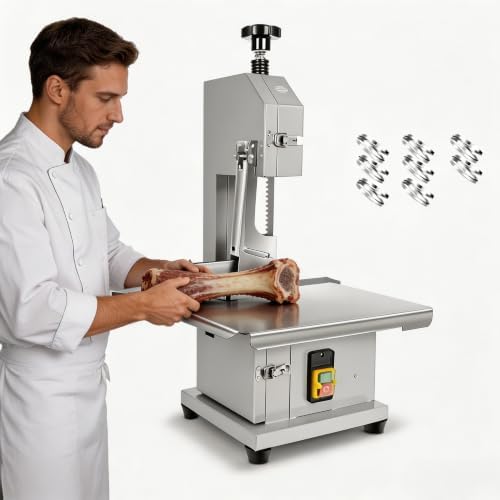
An electric meat bandsaw for anyone processing multiple animals a season or regularly breaking down large cuts.
💛 Best Value
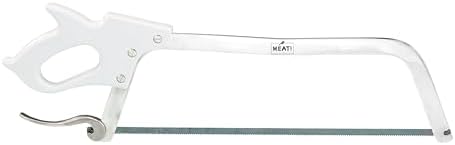
A compact manual meat saw that covers occasional bone cutting without the cost or storage footprint of a bandsaw.
Picks by Situation: High Volume and Field Use
Two more situations call for a saw chosen around a specific job rather than an all-purpose pick.
🏭 Best for High Volume
A full-size butcher bandsaw with a motor built for sustained, repeated cutting, suited to processing multiple animals or large bulk orders.

🏕️ Best for Field and Portable Use
A compact folding bone saw that packs easily for field dressing and initial breakdown before meat gets to the main processing area.

Stainless Steel and Cleanability
Full stainless steel construction resists rust and corrosion far better than carbon steel under the repeated contact with blood, moisture, and washing that a bone saw sees over a season, and it is easier to sanitize thoroughly between uses. A saw with a removable blade and simple, exposed surfaces cleans faster and more completely than one with hard-to-reach seams where bone dust and tissue can collect.
Rinse and dry a saw promptly after each use rather than letting it sit, since even stainless steel can develop surface staining or pitting if blood and moisture are left on it for extended periods.
A saw rarely arrives alone in a home setup. Most of the trim it produces ends up ground, and our meat grinder guide covers matching grinder capacity to how much of an animal you break down at once.
Common Mistakes to Avoid
- Using a general-purpose wood or hardware saw on bone. The tooth geometry is wrong for bone and tends to tear rather than cut cleanly.
- Buying a bandsaw for occasional, low-volume use. The cost and storage space rarely pay off below a few animals a season.
- Choosing carbon steel to save money upfront. It rusts faster under repeated contact with blood and moisture, and replacement costs add up.
- Letting a saw sit dirty between uses. Bone dust and tissue dry onto the blade and are harder to remove later.
- Ignoring tooth pitch when buying blades. A pitch built for wood or metal will clog or tear through bone rather than cutting it cleanly.
Frequently Asked Questions
What is the difference between a bone saw and a meat saw? The terms are largely interchangeable in home butchering; both describe a saw built specifically for cutting through bone and joints rather than soft tissue.
Is a bandsaw worth it for home use? Only if you process real volume, several deer a season, regular hog processing, or repeated half and whole cow orders. Below that, a hand bone saw is usually enough.
What tooth pitch is best for cutting bone? A pitch designed specifically for bone and meat, not a general-purpose wood or metal blade, which tends to tear rather than cut cleanly.
Can I use a regular hacksaw as a bone saw? A hacksaw with a fresh, food-safe blade can work in a pinch, but it is not purpose-built for bone and generally cuts less cleanly than a dedicated bone saw.
Why does stainless steel matter for a bone saw? It resists rust and corrosion from repeated contact with blood and moisture far better than carbon steel, and it is easier to clean and sanitize thoroughly.
How often should I replace a bone saw blade? Replace it once it no longer cuts cleanly or shows visible dullness, tearing, or damaged teeth, rather than pushing a worn blade through more cuts.
The Bottom Line
Most home processors do fine with a stainless steel hand bone saw, and only need to step up to an electric bandsaw once volume climbs to several animals a season. Match blade length and tooth pitch to the bones you actually cut, and prioritize full stainless steel construction over any other single spec.