Last updated: August 16, 2026
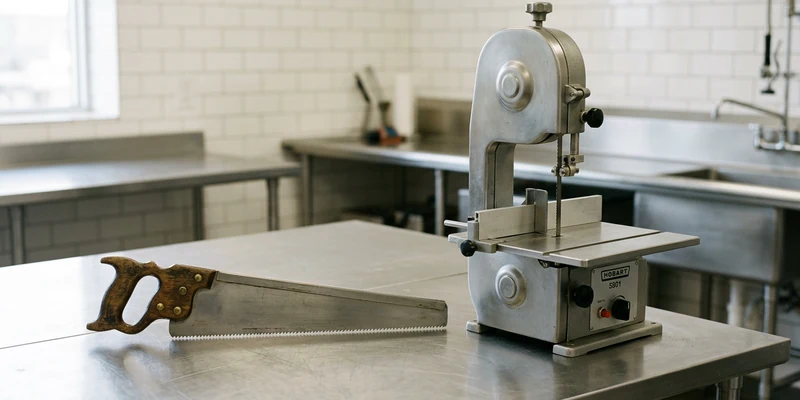
Deciding between a bone saw and a bandsaw mostly comes down to how much you actually process in a season, not which tool looks more capable. Both get through bone, but they are built for very different volumes, and reaching for the wrong tool entirely, like a hardware-store chainsaw, brings problems that go well beyond convenience.
This guide compares hand saws, bandsaws, and hacksaws, explains why a chainsaw has no place near food, and lays out what a typical home hunter or half-cow buyer actually needs.
Quick Answer
Bone saw vs. bandsaw: which do you actually need?
- A manual hand bone saw covers occasional processing, one or two deer a season or a single half cow order, without the cost or space of a bandsaw.
- An electric bandsaw pays off once you are processing multiple animals a year or breaking down large cuts regularly.
- A hacksaw with a dedicated, food-safe blade can work in a pinch, but it is not purpose-built for bone and cuts less cleanly than a real bone saw.
- A chainsaw is not a butchering tool under any circumstances; bar oil and wood debris do not belong anywhere near food.
What Each Tool Is Actually Built For
These four tools get grouped together in searches, but only two of them belong anywhere near meat you plan to eat.
| Tool | Built for | Not suited for |
|---|---|---|
| Hand bone saw | Occasional processing, one or two animals a season, joint and rib cuts | High volume; more effort and time per cut than a powered option |
| Meat bandsaw | Regular or high-volume processing, clean repeated cuts | Occasional, low-volume use; cost and space rarely pay off below real volume |
| Hacksaw, dedicated blade | A backup or emergency option with a fresh, food-only blade | Regular use; slower and less precise than a purpose-built bone saw |
| Chainsaw | Wood, never food | Any contact with meat, under any circumstances |
Hand Bone Saw vs. Bandsaw: The Real Difference
A hand bone saw is inexpensive, portable, needs no power source, and handles the bone cuts involved in occasional processing without much fuss. It takes real physical effort and time per cut, which is a fair trade-off when the total number of cuts in a season is small.
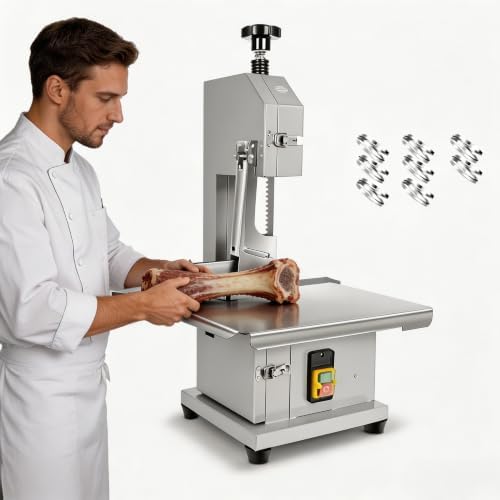
A bandsaw trades that upfront cost and counter space for speed and consistency once volume climbs. Several deer a year, regular hog processing, or repeated half and whole cow orders are the point where a bandsaw’s time savings and cleaner cut face actually justify owning one.

Can You Use a Hacksaw Instead?
A standard hacksaw with a fresh, dedicated blade used only for food can get through bone in a pinch, and plenty of home processors have done exactly that when a proper bone saw was not on hand. It is slower, requires more control to keep the cut straight, and the tooth geometry on general-purpose hacksaw blades is not designed for bone the way a purpose-built bone saw blade is.
If a hacksaw is going to be used this way regularly, keep a blade that is used for nothing else, stored and cleaned the same way any other food-contact tool would be, rather than grabbing whatever blade happens to be in the toolbox.
Why a Chainsaw Is Not a Butchering Tool
A chainsaw can physically cut through bone, which is exactly why the question comes up, but that does not make it a food-safe option under any circumstances. Chainsaw bar and chain oil is not food-grade, the chain itself carries wood dust, dirt, and metal filings from whatever it last cut, and the splintering action that works fine on lumber tears meat and bone in a way a dedicated saw does not.
There is no cleaning routine that makes a chainsaw appropriate for food contact, and no situation in home meat processing where reaching for one is the right call. If a bone needs cutting and no proper saw is available, a clean hacksaw blade or a trip to finish the job later is the better choice every time.
What a Home Hunter Actually Needs
For most home hunters processing one or two deer a season, a stainless steel hand bone saw alongside a good boning knife covers everything from field dressing through final breakdown, without adding a machine that spends most of the year in storage. The saw handles joints, ribs, and the spine; the knife handles everything else.
Step up to a bandsaw only once volume genuinely justifies it, several animals a year, regular hog or beef processing, or repeated large bulk orders where the time saved on dozens of cuts adds up fast. Our guide on deer processing after the hunt walks through where bone cutting fits into the full field-to-freezer process.
Cost and storage, not just speed
A bandsaw is also a bigger commitment in ways that go beyond the purchase itself: it takes up dedicated counter or shop space, needs its own cleaning routine after every use, and sits idle for most of the year if your actual processing volume stays low. A hand saw stores in a drawer and costs a fraction as much, which is worth weighing honestly against how many animals you actually process before assuming bigger is better.
Families who buy a half cow occasionally, rather than processing multiple animals every year, are usually better served putting that budget toward a good knife set or a reliable vacuum sealer instead of a bandsaw that mostly collects dust between uses.
Common Mistakes to Avoid
- Reaching for a chainsaw because it is already out. Bar oil, debris, and splintering make it unsafe for food under any circumstances.
- Buying a bandsaw before volume justifies it. A hand saw covers occasional processing at a fraction of the cost and storage space.
- Using a general hardware hacksaw blade instead of a dedicated one. A blade that has cut anything else is a contamination risk near food.
- Forcing a dull or wrong-pitch blade through bone. This tears the cut and increases the chance of the blade slipping.
- Skipping cleaning between animals. Bone dust and tissue on a saw is a cross-contamination point, whatever tool you use.
Frequently Asked Questions
Bone saw vs. hand saw: what’s the difference? “Hand bone saw” and “hand saw” are generally the same thing in this context, a manual saw built specifically for cutting through bone and joints.
Should I buy a bone saw or a band saw? A hand bone saw suits occasional processing, one or two animals a season. A bandsaw pays off once you process multiple animals a year or handle large cuts regularly.
Can a chainsaw cut through bone? Physically, yes, but it should never be used to. Bar oil is not food-grade, and the chain carries wood debris and splinters bone rather than cutting it cleanly.
Is a bone saw the same as a hacksaw? Not quite. A dedicated bone saw blade is designed specifically for bone, while a hacksaw is a general-purpose tool that can work as a backup with a fresh, food-only blade.
How many deer does it take to justify a bandsaw? There is no fixed number, but most home processors see the payoff once they are handling several animals a year rather than one or two.
What should I use to cut through a deer’s spine or ribs? A stainless steel hand bone saw handles this well for occasional processing; a bandsaw is the faster option once volume increases.
The Bottom Line
A hand bone saw covers most home hunters and occasional processors just fine, while a bandsaw earns its cost only once volume climbs to multiple animals a year. A dedicated hacksaw blade works as a backup, but a chainsaw is never an acceptable substitute for either one.
See what each tool is built for