Last updated: August 16, 2026
A good knife sharpener matters more in meat processing than in almost any other kitchen task. Breaking down a whole animal, boning out primals, or trimming silverskin with a dull blade is slower, more tiring, and genuinely more dangerous than doing the same work with a sharp edge, since a dull knife needs more force and force is exactly what leads to slips.
This guide covers the sharpener styles worth knowing, the knives that see the heaviest use in home butchering, and how sharpening fits into a regular maintenance routine rather than a once-a-year emergency fix.
This article contains affiliate links. If you buy through them, we may earn a commission at no extra cost to you.
Quick Answer
Which knife sharpener should you buy?
- For most home processors, an electric knife sharpener with multiple stages gets a working edge back fast without much practice.
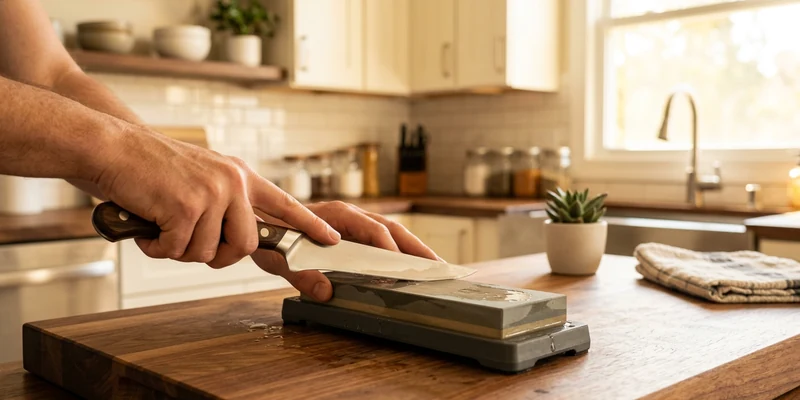
- If you already know how to use one, a manual whetstone gives more control over the final edge and works on any blade shape.
- Either way, pair your sharpener with a honing steel, which does not sharpen but keeps an already-sharp edge aligned between sharpening sessions.
Note: sharpening removes metal permanently, while honing does not. Confusing the two wears a blade down faster than necessary.
What to Check Before You Buy
Sharpeners range from simple pull-through devices to multi-stage systems, and the right pick depends on how much control you want versus how much speed you need.
| What to check | Why it matters | What to look for |
|---|---|---|
| Sharpening stages | A single coarse stage leaves a rough edge; finishing stages refine it | At least two stages, coarse and fine, ideally with a polishing stage |
| Blade compatibility | Boning and fillet knives often have thin, flexible, curved blades | A sharpener rated for the blade widths and angles you actually own |
| Manual vs electric | Speed and consistency trade off against control and feel | Electric for speed and consistency, manual whetstones for control and portability |
| Angle guide | A wandering angle rounds an edge instead of sharpening it | A built-in angle guide on manual systems, or a fixed slot design on electric models |
| Grit range | Different repair jobs need different levels of aggressiveness | Coarse grit for damaged or very dull edges, fine grit for regular touch-ups |
| Durability of guides | Cheap sharpeners can actually damage a good knife’s edge geometry | Reviews and manufacturer materials that describe consistent, repeatable results |
Electric, Manual, and the Honing Steel That Is Neither
An electric knife sharpener pulls the blade through slotted abrasive wheels set at a fixed angle, which makes it fast and forgiving for anyone who has not spent years practicing freehand sharpening. It is the practical choice for a busy processing day when several knives need attention before the work starts.
A honing steel, despite looking similar to a sharpening rod, does not remove metal the way a sharpener does. It realigns a rolled or bent edge back into place, which is why running a blade over a honing steel before each use keeps an already-sharp knife cutting well for longer between actual sharpening sessions. Skipping honing does not dull a knife by itself, but it lets small edge damage accumulate faster.
The Knives That Matter Most in Meat Processing
A boning knife, with its narrow, often flexible blade, is built for working close to bone and joints without wasting meat. A fillet knife shares that flexibility but is thinner still, suited to fish and to trimming silverskin and connective tissue from larger cuts. A meat cleaver handles the heavier work, portioning through smaller bones and flattening cuts, and belongs in a separate category from the finer boning and fillet blades since it depends on weight rather than edge finesse.
Most home processors do not need a full butcher knife set on day one. A boning knife, a fillet knife, and a chef’s or breakdown knife cover the bulk of the work, with a cleaver added once bone-heavy tasks become routine.
Our Top Picks at a Glance
How we chose: we compared widely available sharpeners on stage count, blade compatibility, and how consistently owners report a sharp, repeatable edge over regular use. Selections lean on manufacturer specifications and recurring themes in customer feedback rather than any hands-on trial of our own.
🏆 Best Overall
A multi-stage electric knife sharpener that handles coarse repair and fine finishing in one pass, built for knives that see regular heavy use.

⭐ Upgrade Pick
A guided whetstone system with an adjustable angle guide, for processors who want a razor edge and are willing to spend a little more time to get it.

💛 Best Value
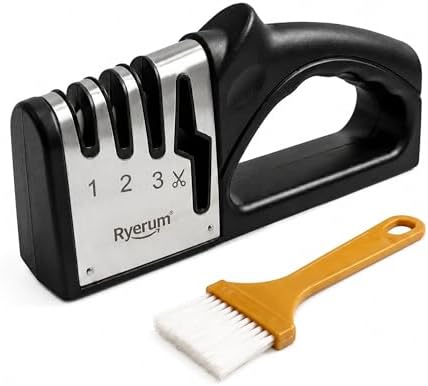
A compact pull-through sharpener that covers coarse and fine stages at an accessible entry point for someone building a first kit.
Rounding Out the Kit
A sharpener alone is only half the maintenance routine.
🔩 Best Honing Steel
A standard ceramic or steel honing rod for realigning an edge between sharpenings, the tool that keeps a freshly sharpened knife working like new for weeks instead of days.

🔪 Best Boning Knife
A narrow, semi-flexible boning knife built for working close to joints and bone without wasting usable meat, the single most-used blade in home butchering.

Building a Sharpening Habit
Sharpening on a schedule beats sharpening in an emergency. Hone before every processing session and run knives through a full sharpening whenever the edge starts catching on a fingernail test rather than sliding across it. This matters as much for safety as for speed, since our meat grinder guide and any breakdown work both go faster and more predictably with a properly maintained edge.
Once meat is broken down and trimmed, the next steps are smoking, cooking, or freezing it. Our smoker guide and chest freezer guide cover what comes after the knife work is done, and a vacuum sealer protects the cuts you just spent time trimming clean.
Common Mistakes to Avoid
- Confusing honing with sharpening. A honing steel maintains an edge; it does not restore a truly dull one.
- Using the wrong sharpener for a thin, flexible blade. Fillet and boning knives can be damaged by systems built for stiff chef’s knives.
- Sharpening only when a knife feels unusable. A well-maintained edge is safer and easier to control than one that has been neglected for months.
- Skipping the angle guide. A wandering freehand angle rounds an edge over time instead of refining it.
- Ignoring cleaning and drying. Meat processing knives that sit wet or dirty corrode and dull faster than knives that are cleaned right after use.
Where to Go From Here
Once your knives are sharp and your breakdown routine is smooth, the next equipment decisions usually move toward grinding and preserving what you process. Our meat grinder guide and vacuum sealer guide pick up right where the knife work leaves off.
Frequently Asked Questions
What is the difference between honing and sharpening? Honing realigns an edge that has bent slightly out of true and does not remove metal. Sharpening grinds away metal to create a new, sharp edge. Most knives need honing often and full sharpening much less frequently.
How often should butchering knives be sharpened? It depends heavily on how much cutting you do and what you cut, including bone contact. A simple test is whether the blade still catches on a fingernail rather than sliding across it.
Is an electric knife sharpener as good as a whetstone? Electric sharpeners are faster and more forgiving for consistent results without practice. Whetstones offer more control over the final edge but require developed technique to use well.
What knife should I buy first for meat processing? A boning knife covers the widest range of butchering tasks for most beginners, followed by a fillet knife for finer trimming work as skills develop.
Can I sharpen a fillet knife the same way as a chef’s knife? Not always. Thin, flexible blades need a sharpener or technique that supports the blade properly, since systems built for stiff blades can flex and damage a fillet knife’s edge.
Do I need a full butcher knife set to get started? No. A boning knife, a fillet knife, and a general breakdown knife handle most home processing needs, with a meat cleaver added later for bone-heavy work.
The Bottom Line
The best knife sharpener for meat processing is a multi-stage electric model for speed and consistency, or a guided whetstone if you want more control over the finished edge. Add a honing steel to maintain that edge between sharpenings, and treat a boning knife and fillet knife as the core of your kit before adding a meat cleaver for heavier bone work.