Last updated: August 16, 2026
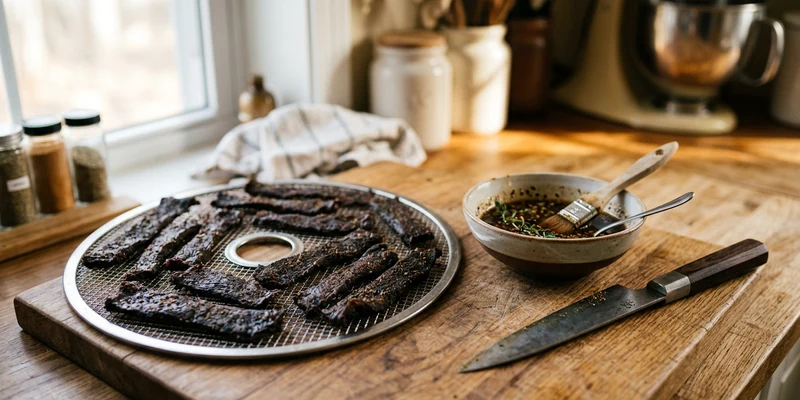
Learning how to make beef jerky in a dehydrator comes down to four things done in the right order: choosing lean meat, slicing it consistently, marinating it, and drying it at a temperature and duration that actually gets it safe and shelf stable. Skip the food safety step at the start and the rest of the process doesn’t fix that gap.
This guide walks through dehydrating beef jerky from raw meat to finished strips, including the USDA pre-heat step that home dehydrators can’t handle on their own, and how to tell when a batch is actually done.
Quick Answer
How do you make beef jerky in a dehydrator?
- Slice lean, trimmed beef into uniform strips, marinate it under refrigeration, then heat it to an internal temperature of 160°F before drying, per USDA guidance.
- Dry the pre-heated strips at 130°F to 140°F until they bend and crack without breaking apart or feeling wet in the middle.
- Most batches take roughly 4 to 8 hours in the dehydrator, depending on strip thickness, marinade, and how humid your kitchen is.
- The pre-heat step matters because a dehydrator’s low drying temperature alone will not reliably kill bacteria, and dried meat makes surviving bacteria more heat resistant afterward.
Dehydrating Beef Jerky Step by Step
Each stage affects the next, so skipping or rushing one usually shows up as a problem later in the batch. This table lays out the order and what each step is actually doing.
| Step | What to do | Why it matters |
|---|---|---|
| Trim and slice | Remove visible fat; slice into uniform 1/8 to 1/4 inch strips | Fat turns rancid faster than lean meat dries; uneven strips dry unevenly |
| Marinate | Refrigerate strips in marinade for several hours to overnight | Builds flavor and, with salt and acid, supports the drying process |
| Pre-heat to 160°F | Heat strips to a verified 160°F internal temperature before drying | USDA’s required safety step; a dehydrator alone can’t reliably do this |
| Dry at 130°F to 140°F | Dehydrate at a steady low temperature until done | Removes remaining moisture without needing sustained high heat |
| Check doneness | Bend a cooled piece; it should crack, not snap or feel wet inside | Confirms moisture is low enough for safe, shelf-stable storage |
Choosing and Trimming the Meat
Lean cuts dry into better jerky than fatty ones, since fat doesn’t dehydrate the way muscle does and can turn rancid well before the rest of a strip is ready. Round cuts like eye of round, top round, or bottom round are common choices for dehydrating beef jerky because they are naturally lean and relatively uniform, and our beef cutting chart shows where those cuts come from if you’re working from a larger primal.
Trim visible fat and silverskin before slicing, not after, since it’s far easier to work with a whole piece on a cutting board than with thin strips. Partially freezing the meat for 30 to 60 minutes firms it up and makes clean, even slicing noticeably easier, especially for a home cook without a meat slicer.
Slicing With or Against the Grain
Slicing with the grain, meaning parallel to the muscle fibers, produces jerky with more chew, since those long fibers stay intact through drying, which is the traditional texture most people picture when they think of beef jerky. Slicing against the grain, cutting across the fibers, produces jerky that pulls apart more easily, closer to a shorter, more tender bite.
Neither direction is a safety issue; it’s purely a texture preference. Whichever direction you choose, keep it consistent across the whole batch and aim for even thickness, since strips of different thickness finish drying at different times within the same load.
Marinating Before Drying
A basic jerky marinade combines a salty base, soy sauce or Worcestershire are common choices, with an acid like vinegar and seasonings, then coats the meat under refrigeration, never on the counter, for several hours up to overnight. Refrigeration matters here for the same reason it matters with any raw meat sitting out: it limits how much bacteria can multiply while the marinade has time to work into the strips.
Pat strips dry with paper towels before the pre-heat step, since excess surface marinade slows both heating and drying without adding meaningful flavor once it’s already soaked in.
The USDA Pre-Heat Step: Why 160°F Comes First
USDA’s Food Safety and Inspection Service is specific on this point: heat meat to an internal temperature of 160°F (poultry to 165°F) before dehydrating it, because a dehydrator’s typical drying temperature is not high enough to reliably destroy bacteria like E. coli and Salmonella, and once meat is dried, any surviving bacteria become more heat resistant, not less. This step is what actually makes homemade jerky safe, not the drying time that follows it.
The most reliable way to hit this step is heating marinated strips in a 275°F oven, on a foil-lined tray, until a food thermometer confirms 160°F at the thickest part of several strips, not just one. Some dehydrators have a thermostat that reaches 160°F and can handle this step internally; if yours tops out lower than that, the oven pre-heat is the step to use instead of skipping it.
Dehydrator Temperature and Drying Time
Once strips have hit 160°F, drying happens at a lower, steady temperature, generally 130°F to 140°F, until the moisture content drops enough for the jerky to be shelf stable. Most batches take somewhere between 4 and 8 hours, though thickness, marinade sugar content, humidity, and your specific dehydrator’s airflow all shift that window in either direction.
Rotate trays partway through if your dehydrator uses stacked, vertical airflow rather than a horizontal fan, since bottom or top trays in a stack often dry faster than the middle ones. Our guide to choosing a jerky dehydrator covers the airflow and thermostat differences that affect how long this stage actually takes.

How to Know When Jerky Is Done Dehydrating
Pull a piece out, let it cool to room temperature, and bend it. Properly dried jerky cracks and shows white fibers at the bend but doesn’t snap cleanly in half or feel wet, cool, or spongy in the middle. If a piece bends easily without cracking at all, or feels soft in the center, it needs more time.
Check several pieces from different trays and positions rather than just one, since drying isn’t always perfectly even across a full load. When in doubt, dry longer; over-dried jerky is tougher and less pleasant to eat, but under-dried jerky is the one that raises a real storage and safety concern.
Common Mistakes to Avoid
- Skipping the 160°F pre-heat step entirely. This is the actual safety step; drying alone does not reliably kill bacteria.
- Marinating on the counter instead of the refrigerator. Room temperature marination gives bacteria far more time to multiply.
- Slicing strips of uneven thickness. Thinner pieces finish drying long before thicker ones in the same load.
- Judging doneness by look alone instead of the bend test. Color can be misleading; texture at the bend is the more reliable check.
- Leaving fat on the strips. Fat doesn’t dehydrate and tends to turn rancid before the rest of the jerky is ready.
Frequently Asked Questions
How long does beef jerky take in a dehydrator? Most batches take 4 to 8 hours at 130°F to 140°F after the pre-heat step, though thickness, marinade, and your specific dehydrator’s airflow shift that window.
What temperature do you dehydrate beef jerky at? Dry at 130°F to 140°F after first heating the strips to an internal temperature of 160°F, which USDA guidance requires before drying begins.
What temperature should you pre-heat jerky meat to before drying? 160°F internal temperature, verified with a food thermometer at the thickest part of several strips, per USDA Food Safety and Inspection Service guidance.
How do you know when jerky is done dehydrating? Cool a piece and bend it. It should crack and show white fibers at the bend without snapping cleanly or feeling wet or spongy in the middle.
Can you dehydrate beef jerky without pre-heating it first? It’s not recommended. A dehydrator’s drying temperature alone is not high enough to reliably destroy bacteria, and dried meat makes any surviving bacteria more heat resistant afterward.
Should you slice jerky with or against the grain? Either works safely. With the grain gives a chewier bite; against the grain gives a more tender, easier-to-pull-apart piece. It’s a texture choice, not a safety one.
Why is ground beef jerky treated differently from whole-muscle jerky? Grinding spreads any surface bacteria throughout the meat, so ground beef jerky needs the same 160°F pre-cook step applied just as carefully, if not more so, than whole strips.
The Bottom Line
Dehydrating beef jerky safely means trimming lean meat, slicing it evenly, marinating it under refrigeration, and heating it to 160°F before it ever goes in the dehydrator, per USDA guidance. Dry at 130°F to 140°F until a cooled piece cracks rather than snaps, and check several strips before calling the batch done.