Last updated: August 16, 2026
How long to hang a deer before butchering isn’t really a day-count question, it’s a temperature question. A carcass can hang safely for days in cold enough weather, or needs to come down and get processed the same afternoon if it doesn’t.
This guide covers the temperature window where hanging is actually safe, why outdoor temperature is the deciding factor over any fixed number of days, what a garage adds to that equation, and what to do when conditions are too warm to hang at all.
Quick Answer
How Long Should You Hang a Deer Before Butchering?
- There’s no fixed day count. Hanging is safe as long as the carcass stays at a consistently cold temperature, and unsafe the moment it doesn’t.
- Michigan State University Extension puts the safe threshold at 40°F (4°C) or below to prevent bacterial growth.
- Above that range, the safest move is to skip hanging, bone the deer out, and refrigerate or process it right away.
- A garage is not automatically cold enough. Check its actual temperature with a thermometer rather than assuming it matches the outdoor forecast.
Deer Hanging Temperature: Is It Safe?
Whether hanging is a good idea comes down almost entirely to the temperature the carcass will actually sit at, day and night, for as long as it hangs.
| Temperature range | Is hanging safe? | What to do |
|---|---|---|
| Below 40°F (4°C) | Safe | Hang for a few days if you want, checking that the temperature stays consistent |
| 40 to 50°F (4 to 10°C) | Marginal, not recommended | Bone out and refrigerate promptly rather than leaving it hanging |
| Above 50°F (10°C) | Unsafe to hang | Quarter and refrigerate or process the same day; don’t hang at all |
The Temperature Window That Actually Matters
According to Michigan State University Extension, a deer carcass needs to be kept below 41°F to prevent bacterial growth, with a safe hanging temperature generally cited at 40°F or lower. Other university extension guidance lands in a similar range, with West Virginia University Extension putting the outdoor hanging cutoff at 42°F or lower, which is close enough to the same practical rule: cold refrigerator temperature or colder, consistently.
That’s the number to plan around, not a day count. A carcass hanging at a steady 35°F can safely hang longer than one hanging at 39°F on a mild afternoon, because the risk is driven by bacterial growth at the surface, and bacteria grow faster as the temperature climbs, even within a range that still feels cold to a person standing next to it.
Why Outdoor Temperature Is the Decisive Factor
A hanging carcass doesn’t have its own internal cooling system; it takes on whatever temperature surrounds it, which means the deciding factor is never the calendar or a rule of thumb, it’s the actual air temperature where the deer is hanging. A cold snap that holds steady in the 30s makes multi-day hanging straightforward, while an unseasonably warm stretch during the same week can make same-day processing the only safe option.
Day and Night Swings Matter Too
Many hunting areas see a wide swing between a cold morning and a mild afternoon, especially early in the season. A carcass that spends part of the day above the safe threshold doesn’t get a pass because the morning was cold; what matters is whether the temperature stays consistently low enough across the whole hanging period, not just at its coldest point.
Hanging a Deer in the Garage
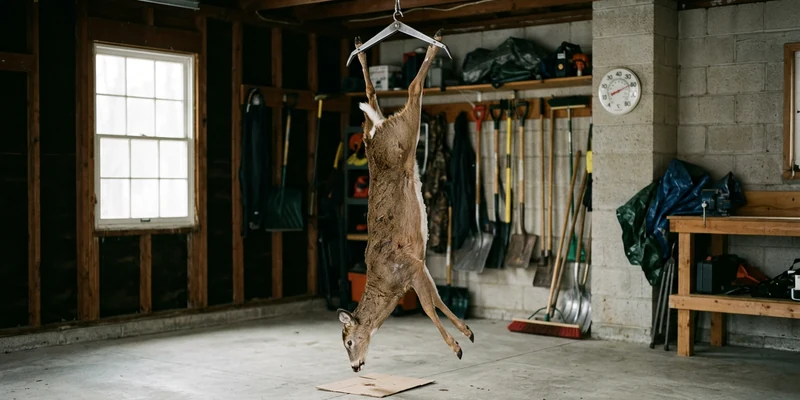
A garage is not automatically as cold as the outdoors, and treating it as an equivalent stand-in without checking is a common mistake. An attached, insulated garage can run noticeably warmer than the outside air, especially with a vehicle parked inside or a shared wall with a heated part of the house, which can push it well above the safe hanging threshold even on a cold day.
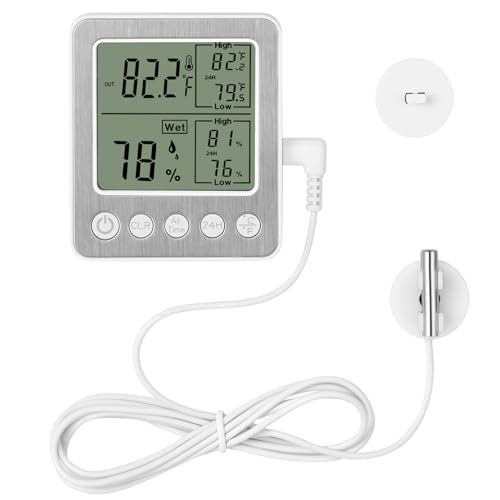
Put an actual thermometer in the space, at the height the carcass will hang, and check it at different times of day before relying on the garage as a hanging spot. An unheated, detached garage in a genuinely cold climate can work close to the same way as hanging outdoors, but the only way to know is to measure it rather than assume it.
Once the hang is over the carcass still has to come apart, and the pelvis and sternum are saw work. Our bone saw guide covers hand saws against powered options for that stage.
What to Do When It’s Too Warm to Hang
When temperatures won’t reliably stay at or below the safe threshold, the answer is to skip hanging and cool the meat down a faster way. Quarter the deer or bone it out completely, then get the pieces into a refrigerator or a cooler packed with ice as quickly as possible, since smaller pieces of meat lose heat much faster than an intact hanging carcass.
This isn’t a downgrade from hanging, it’s the appropriate response to the conditions. A boned-out deer cooling in a properly iced cooler reaches a safe internal temperature far faster than the same deer left hanging in weather that’s a few degrees too warm, and faster cooling is always the safer choice when the temperature question is in doubt.
Deer Aging: Does Hanging Longer Actually Help?
Hanging a carcass longer at cold, consistent temperatures allows natural enzymes in the muscle to break down some connective tissue, which is the same basic process behind dry-aging beef, and can make the meat noticeably more tender. That benefit only holds up at the colder end of the safe range, held steady, for an extended period, which is a much narrower and more demanding target than simply staying under the safety threshold for a day or two.
Reaching and holding that kind of precise, cold, consistent temperature for an extended hang is difficult to guarantee in a home garage or a deer camp, which is exactly why commercial processors who offer extended aging do it in a dedicated cooler with real temperature control. For most home hunters, a shorter hang within the safe window followed by prompt processing is the more realistic and reliably safe approach.
Frequently Asked Questions
How long to hang a deer before butchering? There’s no set number of days. Hanging is safe as long as the carcass stays consistently at or below about 40°F, per Michigan State University Extension guidance, and unsafe the moment temperatures rise above that.
How long can you keep a deer before processing? As long as the hanging or storage temperature stays consistently cold enough, generally 40°F or below. Above that range, process promptly rather than waiting.
Is it safe to hang a deer in the garage? Only if the garage actually stays at or below the safe temperature threshold. Check it with a thermometer rather than assuming it matches outdoor conditions, since an insulated or attached garage often runs warmer.
What is the ideal deer aging temperature? University extension guidance points to 40°F or below as the safety threshold, with the colder end of that range needed for longer aging aimed at extra tenderness.
What should I do if it’s too warm to hang my deer? Skip hanging, bone the deer out or quarter it, and cool the meat quickly in a refrigerator or an iced cooler instead.
Does hanging a deer longer make the meat more tender? It can, through the same enzymatic process behind dry-aged beef, but only when the temperature stays cold and consistent for the entire hang, which is hard to guarantee outside a dedicated cooler.
The Bottom Line
How long to hang a deer comes down to temperature, not a fixed day count. Keep the carcass at or below about 40°F, per Michigan State University Extension guidance, and it can hang safely for several days; above that, bone it out and cool it quickly instead. Measure the actual temperature wherever the deer is hanging, garage included, rather than guessing.