Last updated: August 16, 2026
How to tenderize venison depends on which cut you’re working with more than which trick you use. A thin steak and a tough shoulder muscle need completely different approaches, and one of the most popular tricks in deer camp, soaking venison in milk, does far less than most hunters assume.
This guide covers why venison is naturally tougher than beef, mechanical tenderizing versus marinating, an honest look at the milk soak, and which cuts are better off braised than tenderized at all.
Quick Answer
How Do You Tenderize Venison?
- Mechanical tenderizing, pounding or cubing, works fastest and most reliably on thin cuts like round steak.
- Acidic marinades tenderize the surface only, since they barely penetrate past the outer layer of the meat.
- Soaking venison in milk is more of a flavor trick than a real tenderizer; its acid effect is mild and shallow.
- Tough working-muscle cuts like shanks and neck roasts tenderize far better through slow, moist cooking than through any marinade.
Venison Tenderizing Methods Compared
Not every method works the same way or on the same cuts. This table lays out what each approach actually does.
| Method | How it works | Best used for |
|---|---|---|
| Mechanical pounding or cubing | Physically breaks up muscle fibers | Thin cuts like round steak or cube steak |
| Acidic marinade (vinegar, citrus, wine) | Acid partially breaks down surface proteins | Steaks and thin cuts, surface effect only |
| Milk or buttermilk soak | Mild acid effect plus flavor change, minimal real tenderizing | Softening gamey flavor more than tenderizing |
| Enzymatic marinade (pineapple, papaya) | Plant enzymes break down protein, can turn mushy if left too long | Thin cuts, short marinade time only |
| Slow, moist cooking (braising, stewing) | Breaks down collagen into gelatin over hours | Tough working-muscle cuts like shanks and neck |
Why Venison Is Tougher Than Beef
Deer are lean, active animals that use their muscles constantly for walking, running, and grazing, which builds denser muscle fiber than a beef cattle breed raised to put on fat efficiently. That difference in how the animal lives shows up directly on the plate as tougher meat, especially in the muscles that do the most work.
The other half of the equation is fat. Beef gets a lot of its tenderness and juiciness from intramuscular marbling, the small flecks of fat woven through the muscle that melt during cooking and lubricate each bite. Venison carries very little of that marbling, so there’s less fat to soften the texture, which is part of why lean venison cuts dry out and toughen faster than a well-marbled steak cooked the same way.
Mechanical Tenderizing vs. Marinating
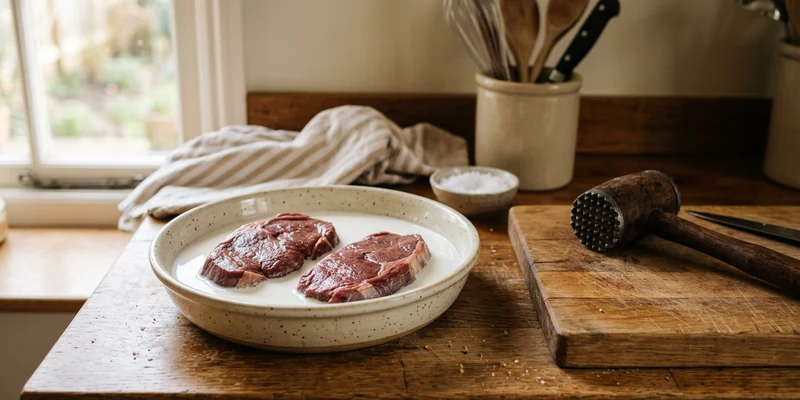
Mechanical tenderizing, pounding with a meat mallet or running the meat through a blade-style tenderizer, works by physically breaking the muscle fibers apart, which is why it takes effect immediately and works all the way through a thin cut. It’s the most reliable method for thin steaks and cutlets, and it’s also what makes cube steak and chicken-fried venison possible from cuts that would otherwise stay chewy.
Marinating works differently and more slowly. Acid from vinegar, citrus, or wine denatures some of the surface proteins, which softens the outer layer of the meat, but marinades penetrate only a small distance into the muscle no matter how long you leave them, so a thick roast marinated overnight is tender at the surface and unchanged at the center. Marinating is better thought of as a flavor and surface-texture tool than a way to fix a genuinely tough cut all the way through.
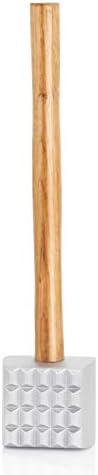
Thin, even slices across the grain do much of the same work as a mallet without bruising the meat, which is easier with a slicer than by hand on a partly frozen roast.
Does Soaking Venison in Milk Actually Work?
Mostly not the way deer camp folklore claims. Cultured dairy like buttermilk does contain lactic acid, and acid can denature some surface protein the same way a vinegar marinade does, but the effect is mild, and like any marinade it barely penetrates past the outer layer of the meat, so it can’t meaningfully tenderize a thick roast or a whole backstrap.
What a milk or buttermilk soak more reliably does is change flavor, not texture. It can help draw out blood and mute some of the stronger, gamier notes some cuts carry, which hunters often experience as the meat “tasting better” and mistake for tenderizing. If tenderness is the actual goal, a milk soak is a reasonable extra step but not a substitute for mechanical tenderizing or the right cooking method for a tough cut.
Cuts You Should Braise, Not Tenderize
Shanks, neck roasts, and shoulder cuts come from the muscles a deer uses hardest and most constantly, and no amount of pounding or marinating turns that connective tissue tender in the way slow, moist cooking does. Braising, cooking the cut submerged or nearly submerged in liquid at a low temperature for an extended time, dissolves the collagen in those tougher muscles into gelatin, which is what actually makes the meat fall-apart tender rather than just less chewy on the surface.
Treating those cuts like a steak, quick heat with a marinade or a pounding session beforehand, tends to leave them just as tough on the inside while drying out the outside. Save the mechanical and marinade tricks for steaks and cutlets, and let a slow cooker, Dutch oven, or covered roasting pan do the actual work on shanks and roasts.
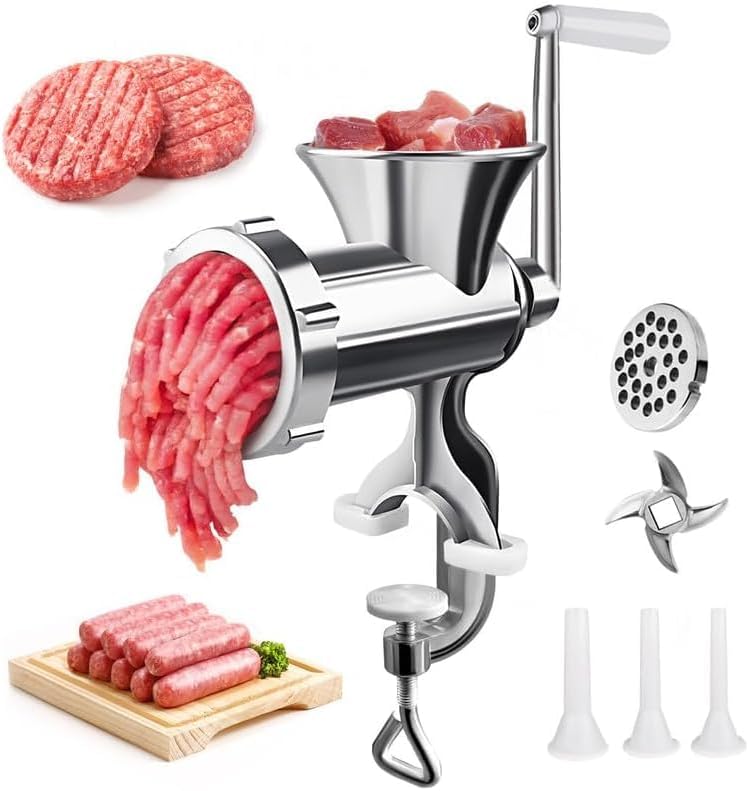
The third option for those cuts is to grind them. Shanks, neck and heavy trim make better burger and sausage than they ever make steak, and a grinder turns the toughest part of the animal into the part you use most.
Common Mistakes That Keep Venison Tough
- Cutting with the grain instead of against it. Slicing across the muscle fibers shortens them on the plate, which makes a cut feel more tender even without changing anything about how it was cooked.
- Cooking tough cuts fast and hot. A neck roast or shank treated like a steak stays chewy no matter how well it’s seasoned; those cuts need time and moisture, not high heat.
- Leaving enzymatic marinades on too long. Pineapple and papaya-based marinades keep working the longer they sit, and a thin steak left in one overnight can turn mushy at the surface.
- Skipping the rest after cooking. Cutting into venison immediately after it comes off the heat pushes out juices that would otherwise redistribute, leaving the meat drier and less tender-tasting than it actually is.
- Assuming milk soaking replaces mechanical tenderizing. A milk or buttermilk soak is a flavor step, not a fix for a genuinely tough cut; pair it with pounding or slow cooking rather than relying on it alone.
Frequently Asked Questions
How do you tenderize venison steaks? Mechanical tenderizing, pounding with a meat mallet or cubing with a blade tenderizer, works fastest and most reliably for thin steaks, since it physically breaks up the muscle fibers all the way through.
Does soaking venison in milk tenderize it? Only mildly. The lactic acid in milk or buttermilk has a small surface effect similar to an acidic marinade, but it doesn’t penetrate deep enough to meaningfully tenderize thick cuts. Its bigger effect is on flavor, not texture.
Why is venison so tough compared to beef? Deer are lean, active animals with denser muscle fiber and very little intramuscular fat, so there’s less marbling to soften the texture during cooking than a typical beef cut has.
What’s the best way to tenderize a venison roast? For tough working-muscle roasts like shoulder or neck, slow, moist cooking such as braising breaks down connective tissue far more effectively than marinating or pounding.
Can you over-tenderize venison with an enzymatic marinade? Yes. Pineapple or papaya marinades contain enzymes that keep breaking down protein the longer they sit, and leaving thin cuts in one too long can turn the surface mushy rather than tender.
Does marinating venison overnight tenderize the whole cut? No. Marinades only affect a shallow layer at the surface no matter how long you leave them, so a thick cut marinated overnight will still be tough at the center.
The Bottom Line
Tenderizing venison the right way depends on the cut: mechanical pounding or cubing for thin steaks, slow braising for tough working-muscle roasts, and marinades treated as a surface and flavor tool rather than a fix for a whole tough cut. Milk and buttermilk soaks do more for flavor than texture, despite their reputation in deer camp.